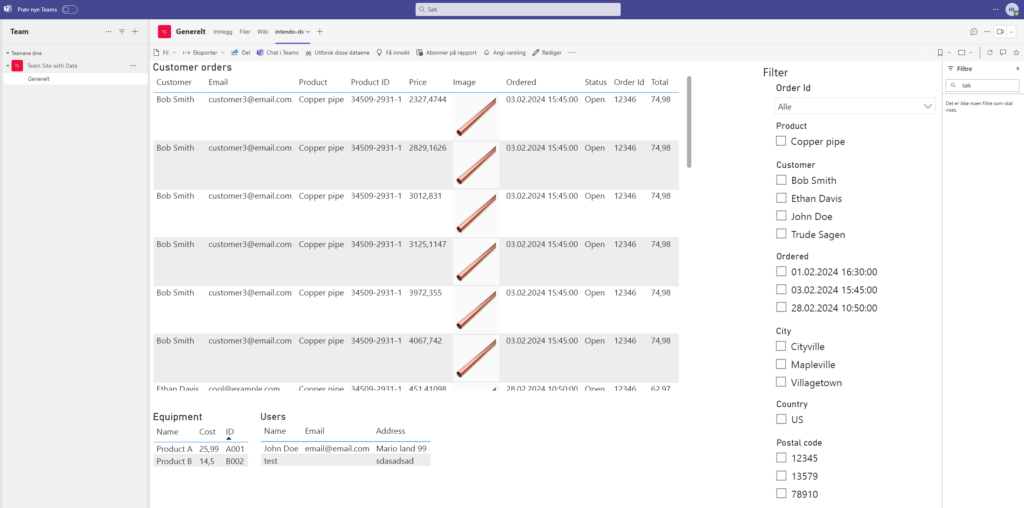
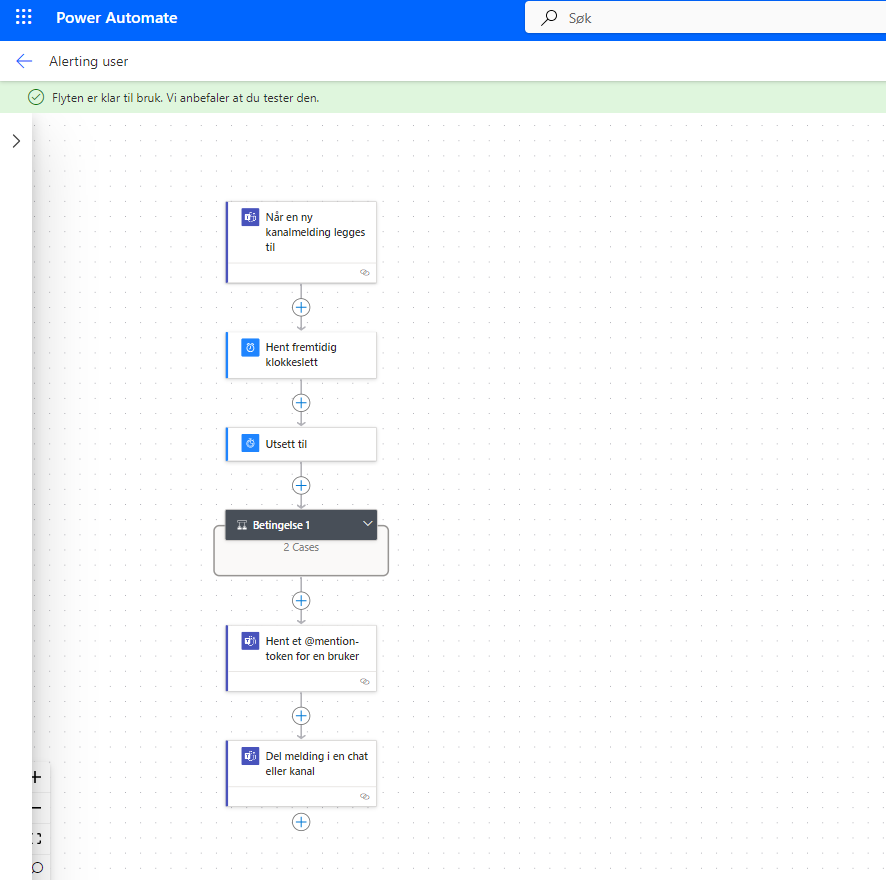
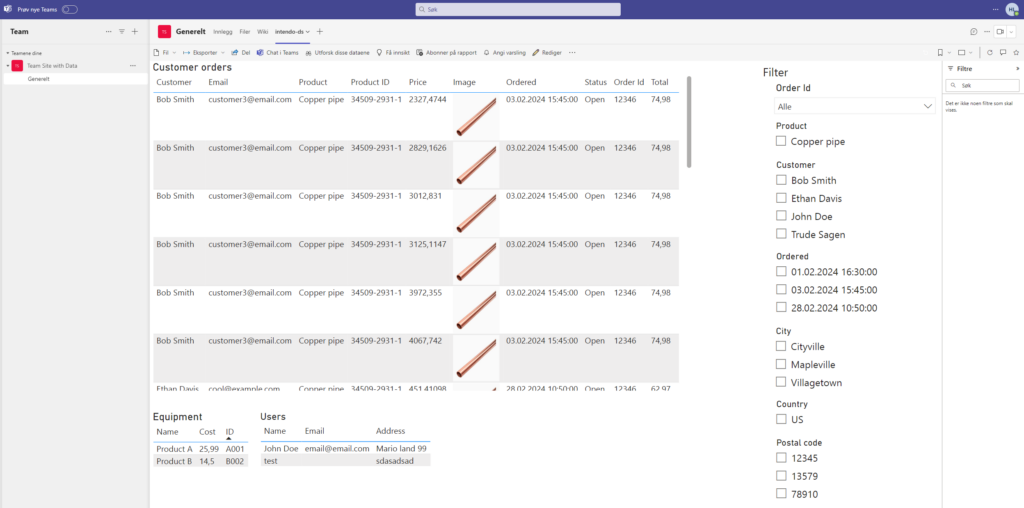
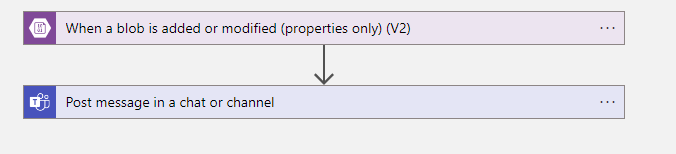
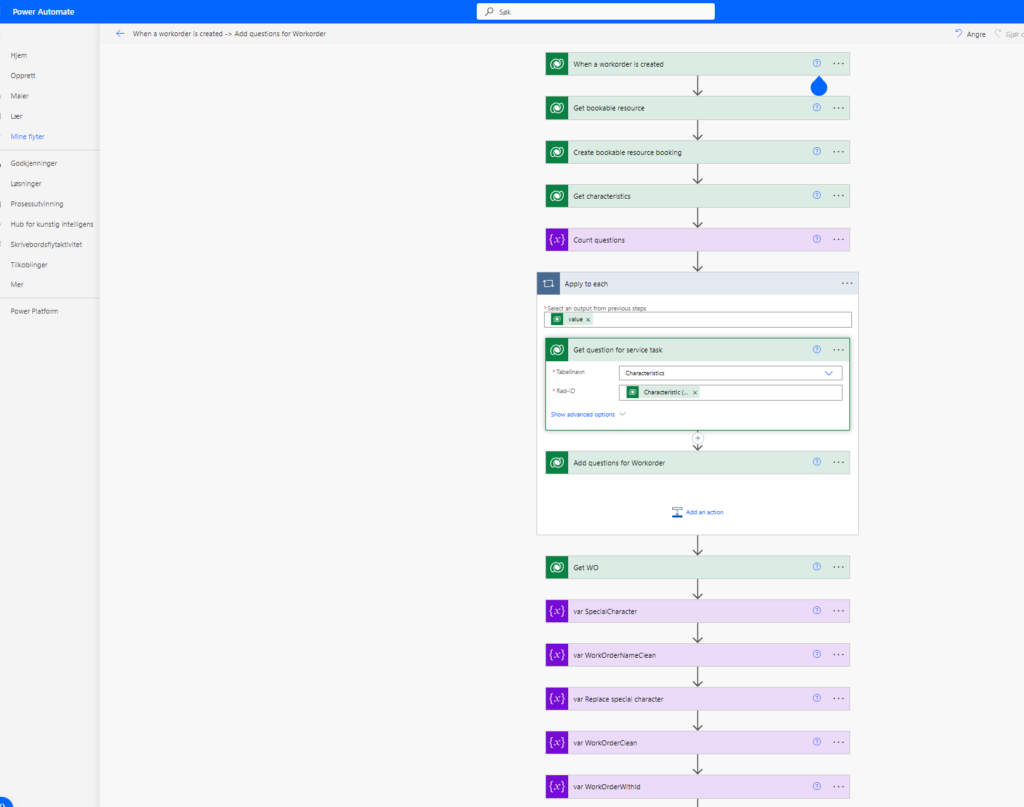
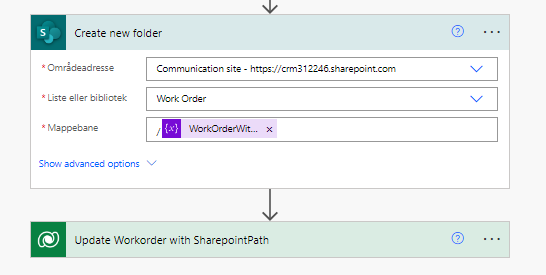
By using Teams and Power BI, we can allow our office workers to handle new orders quickly, and easily. They will receive alerts through an channel of new orders, and to make sure they are handled quickly, a user will be tagged if not handled within 1 hour by using Power Automate
Automation galore! A lot of processes are jumpstarted when a banana is detected and the poor first banana responders need all the help they can get. Notifying next of kin can be a tough task, and for Road Authority personell with limited people skills automation is key.
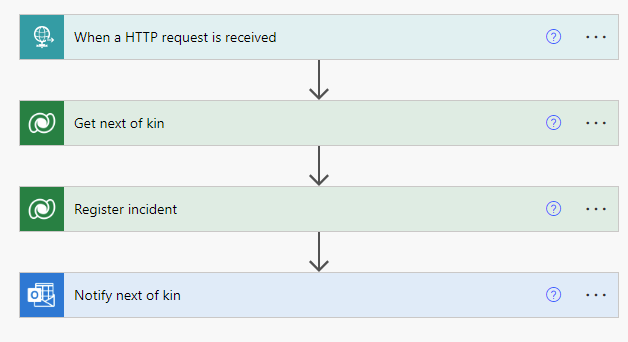
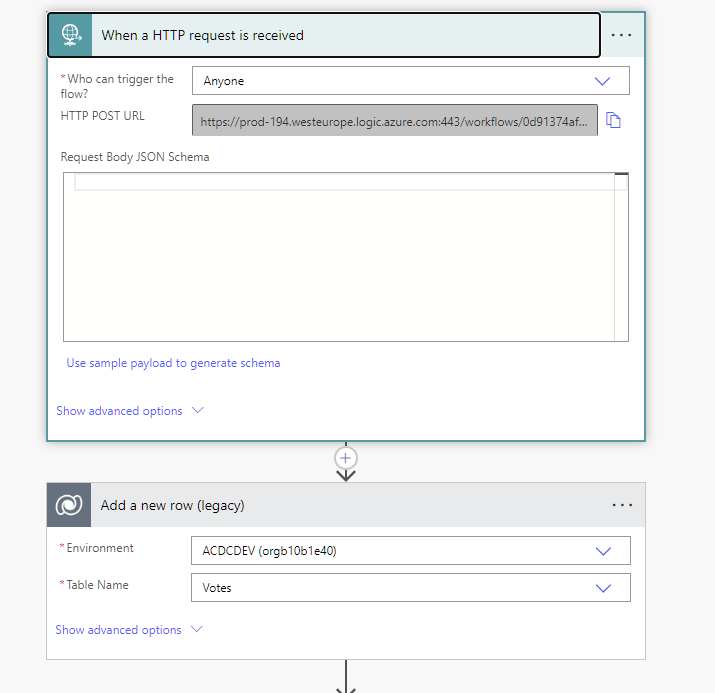
We have set up a workflow that works like this. When a banana is detected we receive a http request. When then register the incident in Dataverse while also looking up next-of-kin data, and send that to outlook to automatic notifications.
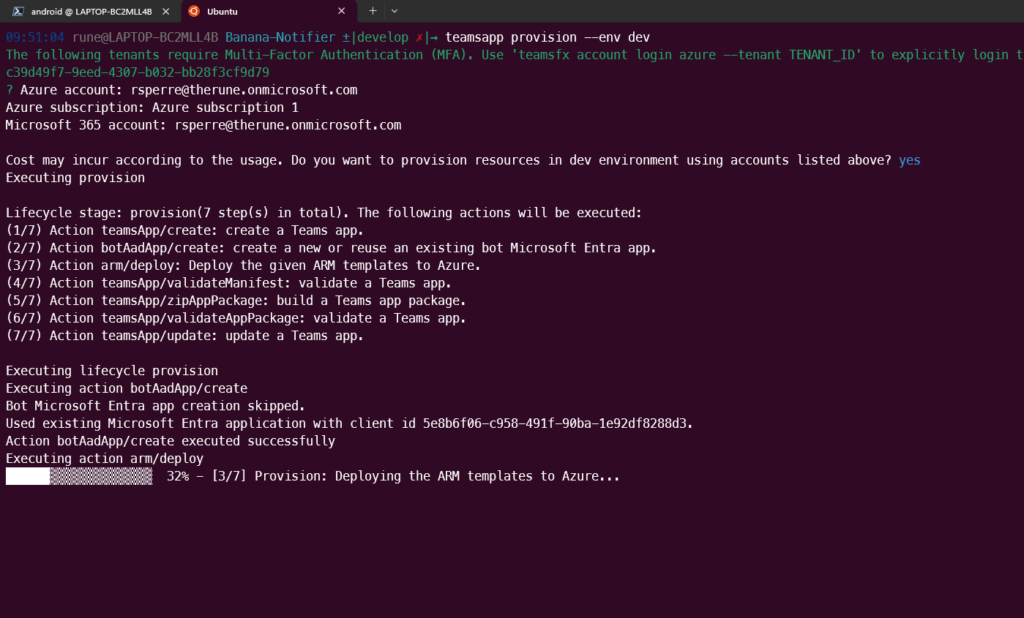
Our solutions have a lot of bits and pieces, having control on how these are deployed are essential. All our Azure resources are handled nicely using ARM template deployment.
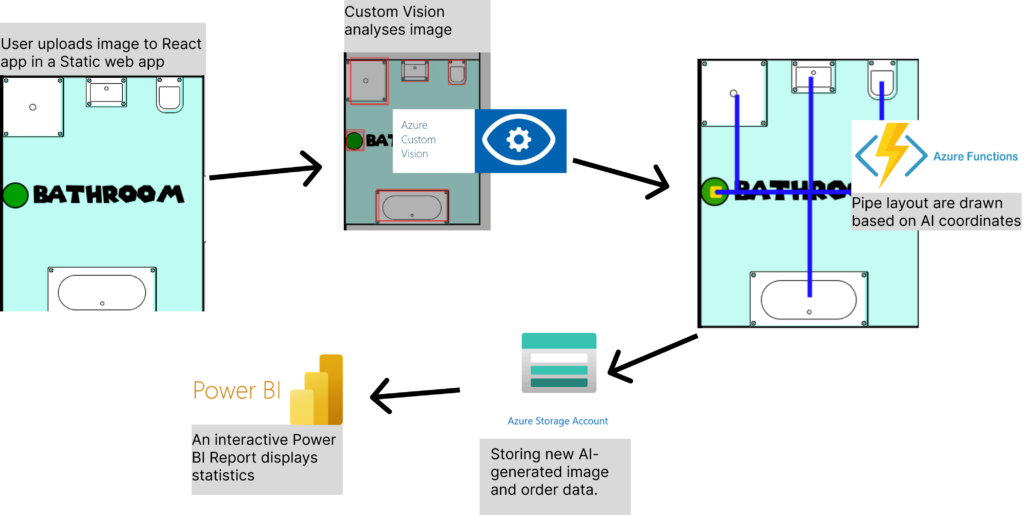
To make our amazing service Tubi work, a lot of cloud is needed. We aim to make the plumber’s job easier by recommending the best layout for where the pipes should go, and for that, we need AI. We have trained a model in Custom Vision to recognize all components in a bathroom that need water. So, when the plumber uploads a floor plan to our Static Web App, the image is sent to our Azure Function App backend in C# Asp.net through our own API. But both the image and the equipment list must be stored somewhere. Therefore, we have also connected to Azure Blob Storage. Then last but not at all least. The people working in the back office have instant interactive reports available to help them with filing and billing through Power BI and alerting the using an automated flow (Badges: Feature Bombing)
Sometimes it works, and that’s plenty
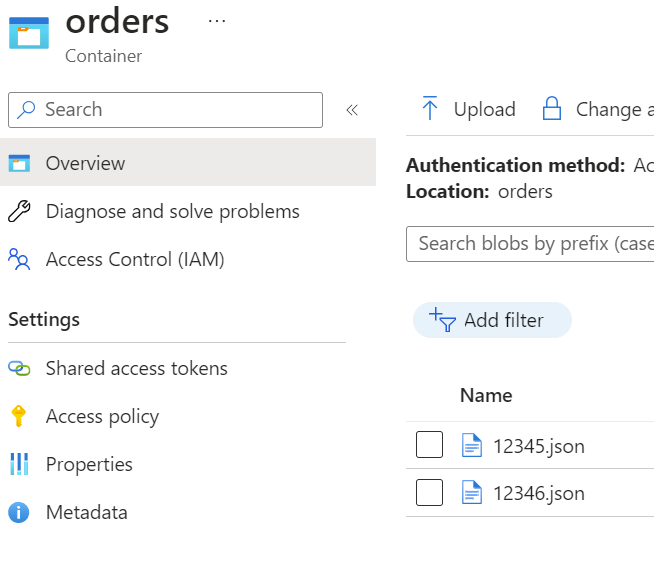
Databases are good, but sometimes it’s easier to just dump everything in one place until you need it again. Yes, it might not be very scalable or very normalized. SQL became too heavy, and we already needed a Blob storage to store the images, so we also dump the order data in the same blob storage as JSON files. It’s old fashioned way of serverstorage, and a bit dirty, but it works! (Badges: Nasty hacker, Retro badge)
Power the backoffice
As the final list of components are decided, they still have to be approved from the accounting team in the office. To make sure they have all the information they require, we have developed a Power BI dashboard to crawl through our registered data and make sure the orders are handled properly (Badges: Crawler, Dash it Out, Dataminer). And to make sure the orders are handled easy and fast, the dashboard is embedded into teams and an alert is automated by using a logic app to make sure the workers can receive and cooperate in realtime (Badges: Embedding Numbnuts, Go with the flow, Pug N’ Play, Power user love, Right Now, Stairway to heaven).
Behold the power of PowerPages! Picture this: a distressed customer, facing a flood of plumbing woes, summons help with a mere click of their mouse or tap of their finger. With the agility of a ninja and the simplicity of a child’s game, they dispatch a plumber to their aid! It’s like summoning a superhero, but instead of capes, they wield wrenches and plungers! With PowerPages, plumbing problems are no match for our valiant customers
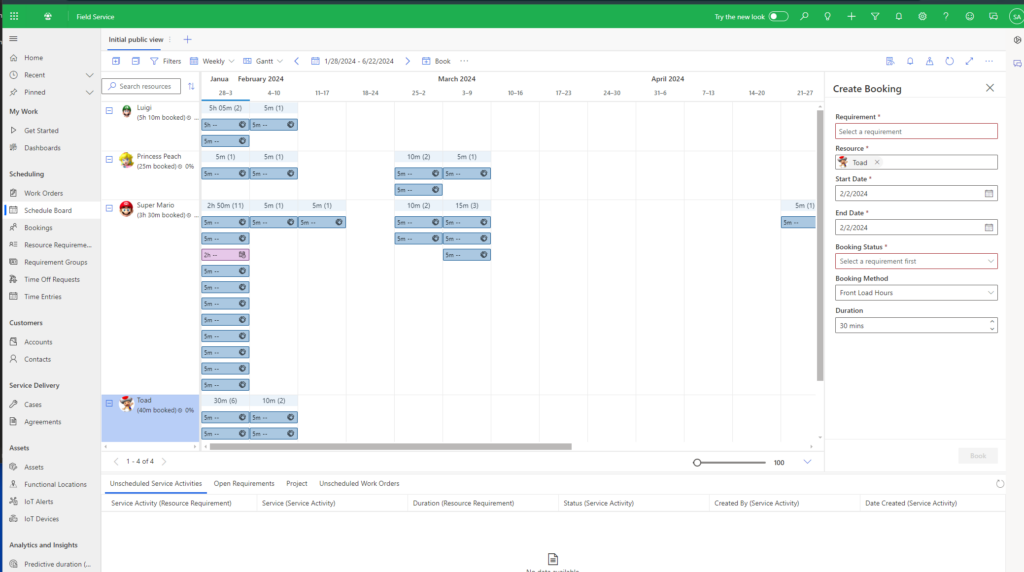
Donkey Kong, the mighty supervisor, perched atop his virtual throne in the Field Service app’s Schedule Board. With a stroke of his mighty ape paw, he oversees his troop of employees as they navigate the jungle of bookings. It’s a wild ride, but with Donkey Kong at the helm, chaos turns into coordinated mayhem
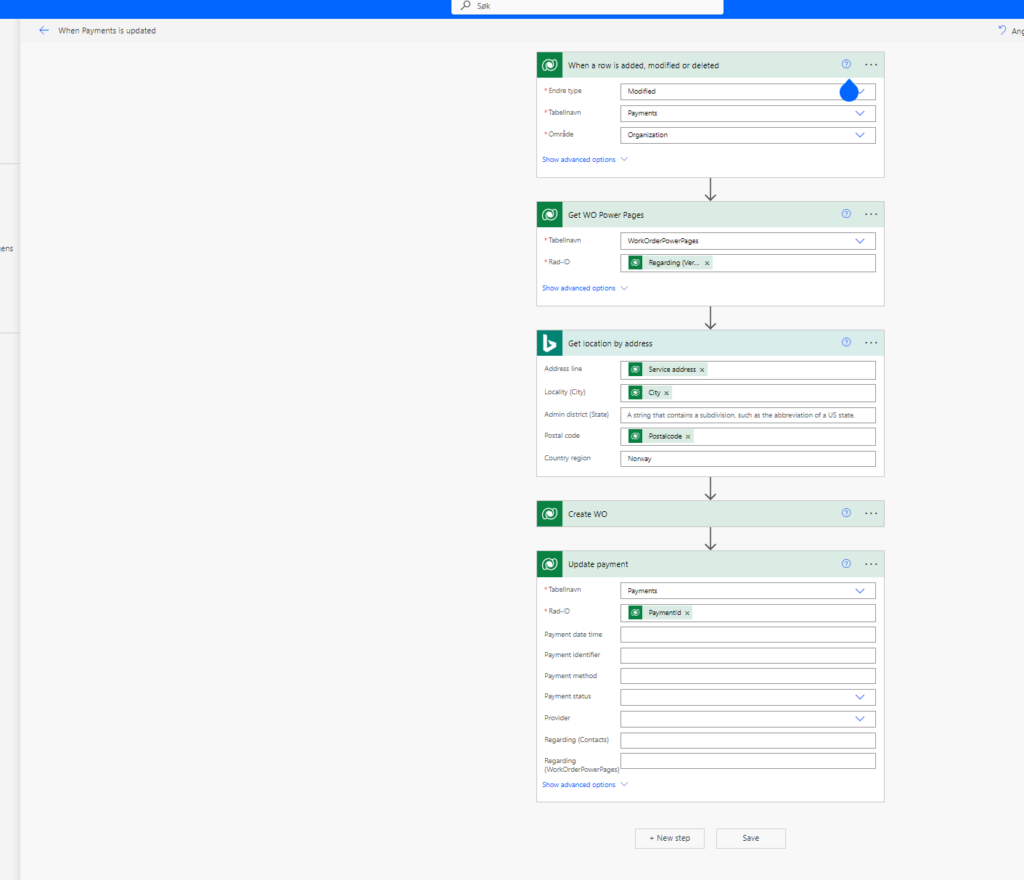
Our trusty plumbers, armed with wrenches and know-how, embarking on their daily quests to conquer leaks and vanquish clogs! But fear not, for with the power of the Bing connector, they’re armed with more than just tools—they’ve got the magic of automatic latitude and longitude retrieval! As they navigate the labyrinth of streets, our fearless plumbers rely on the Canvas app like seasoned adventurers, ensuring they always reach the pot of gold at the end of the address rainbow!
Streamlining Efficiency: The “Go with the Flow” Badge Achievement
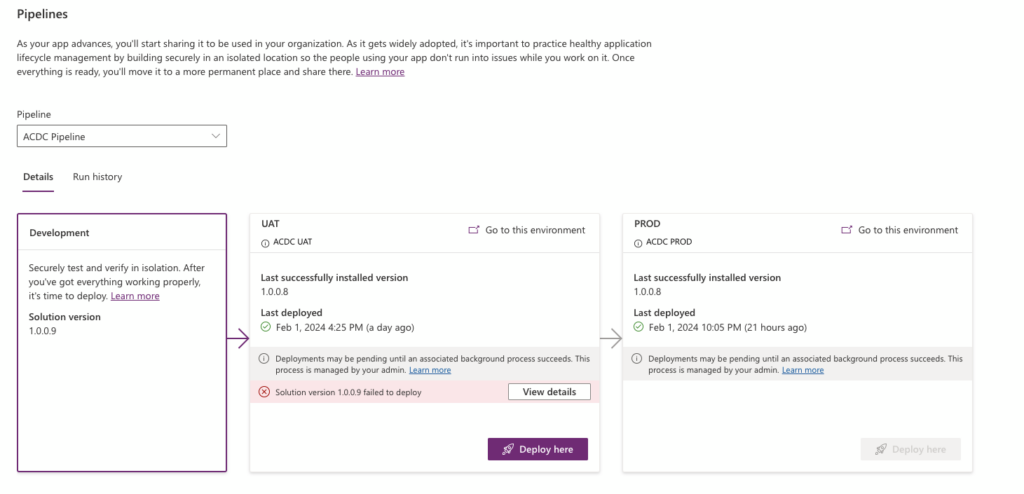
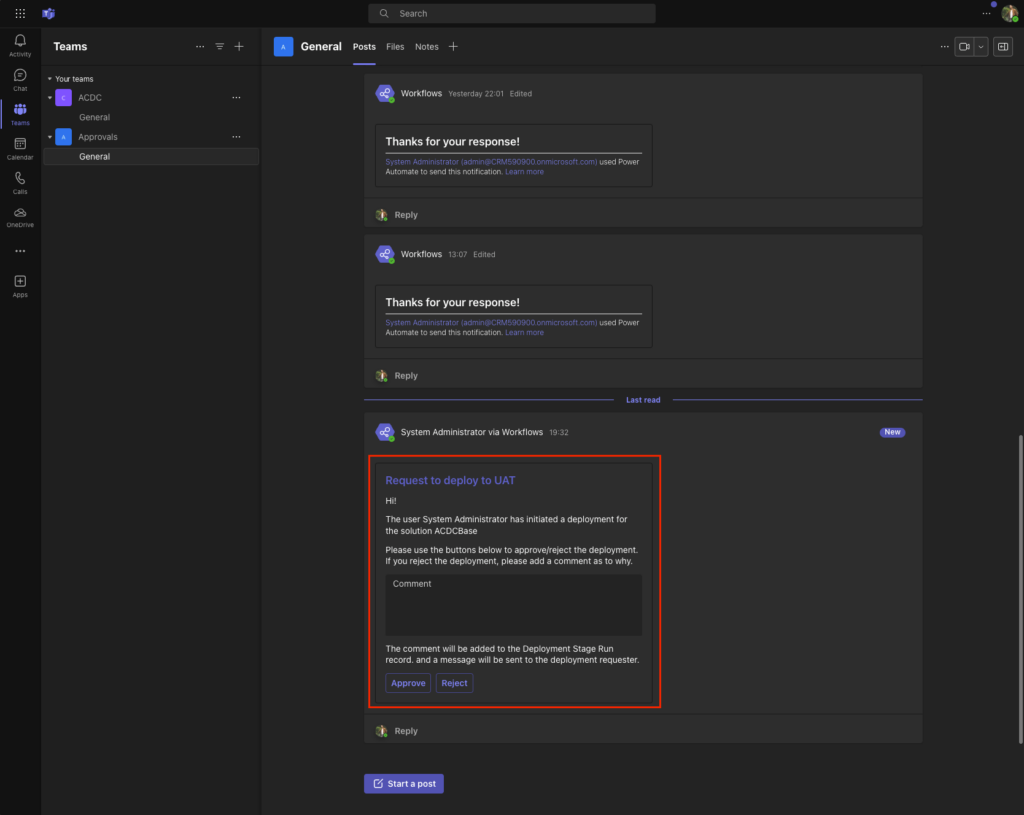
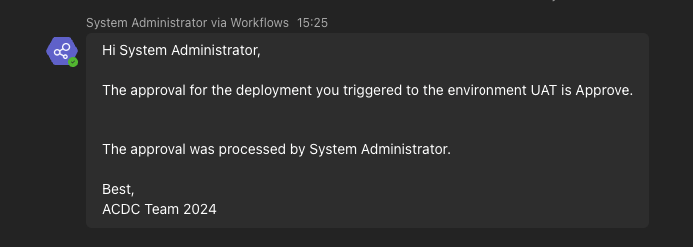
In the pursuit of optimizing business productivity within our solution, the implementation of an ALM pipeline has been a game-changer. This automated transfer of solutions between environments not only saves significant time and effort but also ensures that both unmanaged and managed versioning packages of the solution are seamlessly transitioned. Furthermore, the integration of a Power Automate flow for the approval of deployments has elevated our operational efficiency, marking a significant milestone in our journey to “Go with the Flow.” This achievement underscores our commitment to leveraging workflow automation for enhanced productivity.
Uniting Power and Simplicity: The “Power User Love” Badge
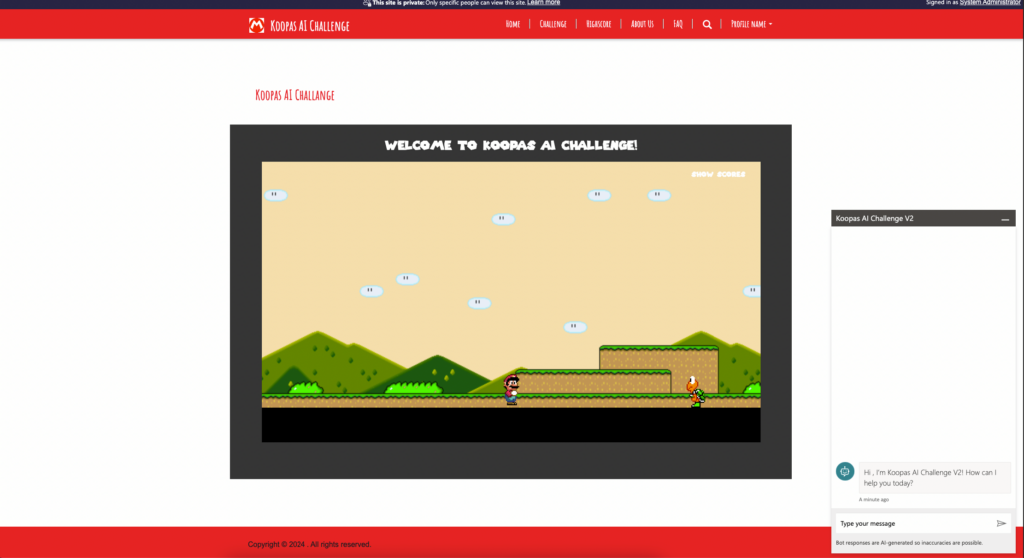
Our solution showcases an exemplary blend of low-code platforms with pro-code customization, embodying the #ProCodeNoCodeUnite philosophy. By implementing a Power Pages site for user interface and login, coupled with a PCF component coded in React and TypeScript for a gamified course, we demonstrate the power of integrating professional coding standards with low-code solutions. This approach not only streamlines development but also opens up a realm of possibilities for creating robust, user-friendly applications.
Gamification at Its Best: Achieving the “Mario Badge”
Elevating user interaction through gamification, the implemented PCF component with interactive controllers to navigate through course levels. Each course represents a level, challenging users to advance and showcase their proficiency. This gamification aspect not only makes learning more engaging but also encourages users to level up their skills in a fun and interactive environment.
Visual Insights: The “Dash It Out” Badge
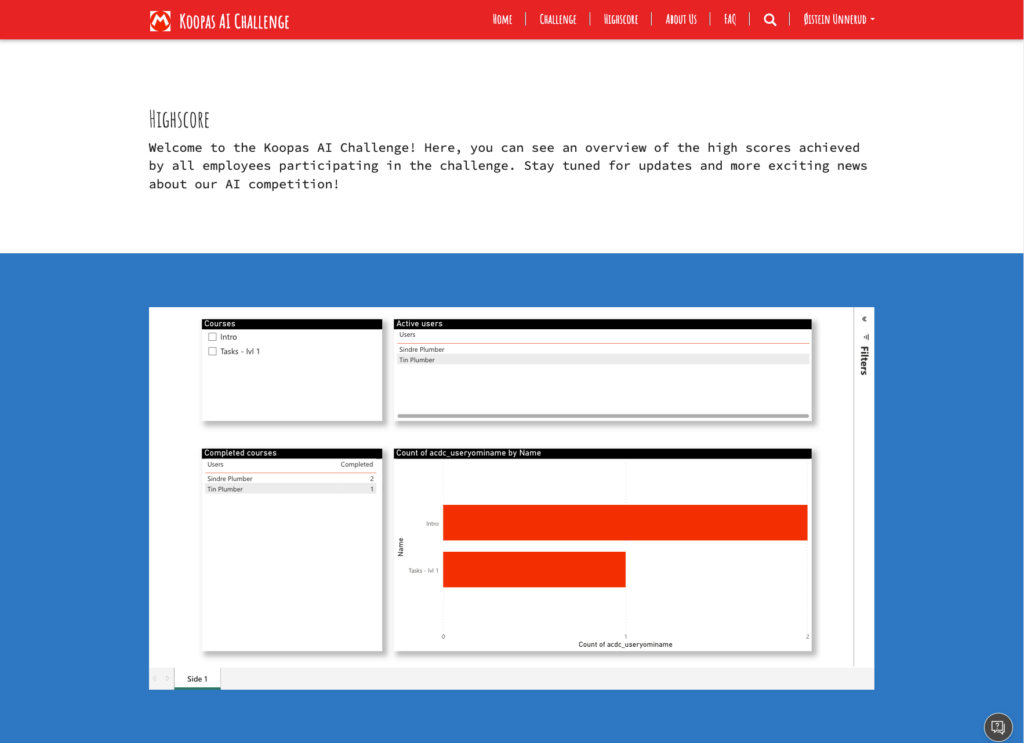
Our solution now features a Power BI report embedded within the Power Pages site, along with additional reports for user access to high scores and admins for an overview of active players and their progress. These reports, showcasing at least four graphs, gauges, or KPIs, highlight the business value of our dashboard. The integration of these visual insights ensures that both users and administrators have a comprehensive understanding of performance metrics at their fingertips.
Adaptive Excellence: Securing the “Chameleon” Badge
The responsiveness of the Power Page, adapting automatically to all devices and screen sizes, exemplifies our solution’s versatility. This inherent adaptability ensures that our application delivers a consistent and user-friendly experience across various platforms, earning us the “Chameleon” badge. It’s a testament to our dedication to creating solutions that are not only powerful but also universally accessible.
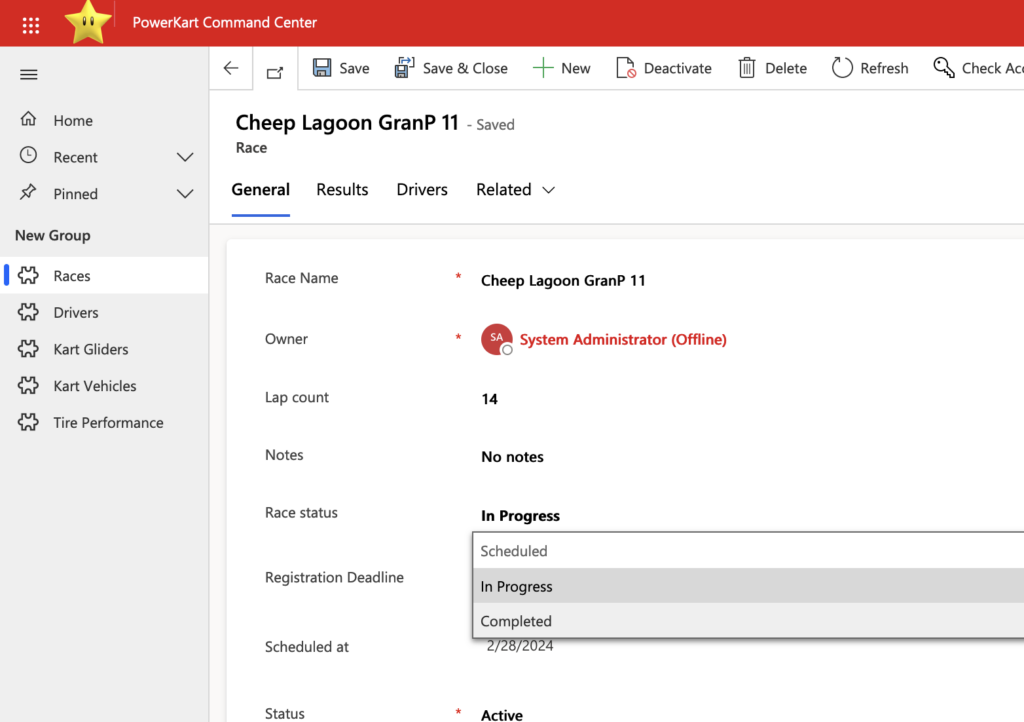
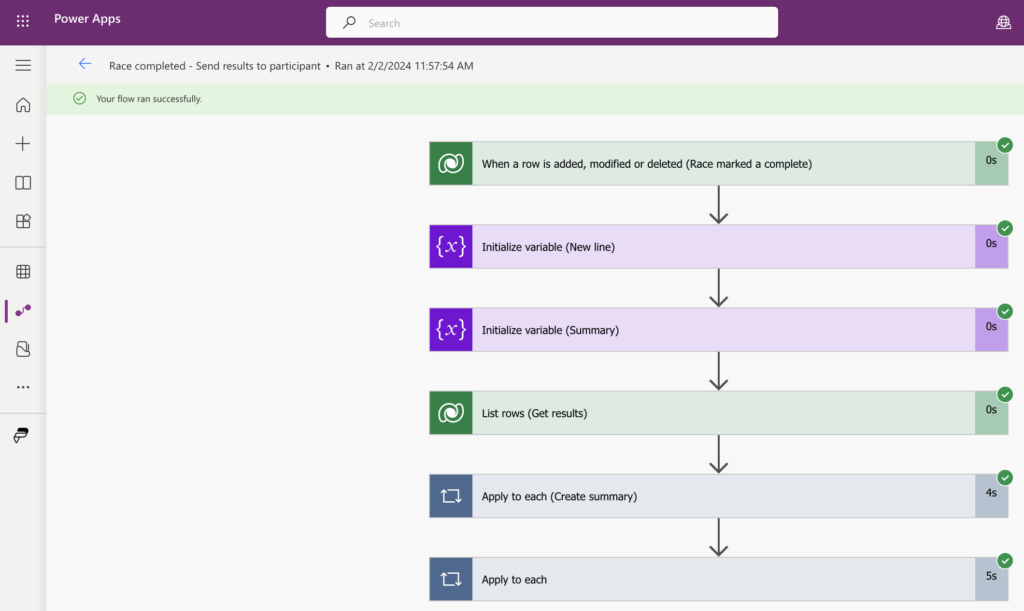
The “Go With The Flow” badge represents our commitment to innovating race management through automated workflows. By implementing a cloud-based solution, we’ve significantly enhanced the efficiency and personalization of post-race communications.
Efficient Trigger Mechanism The process begins immediately after a race concludes. This prompt activation is key to ensuring timely dissemination of race outcomes.
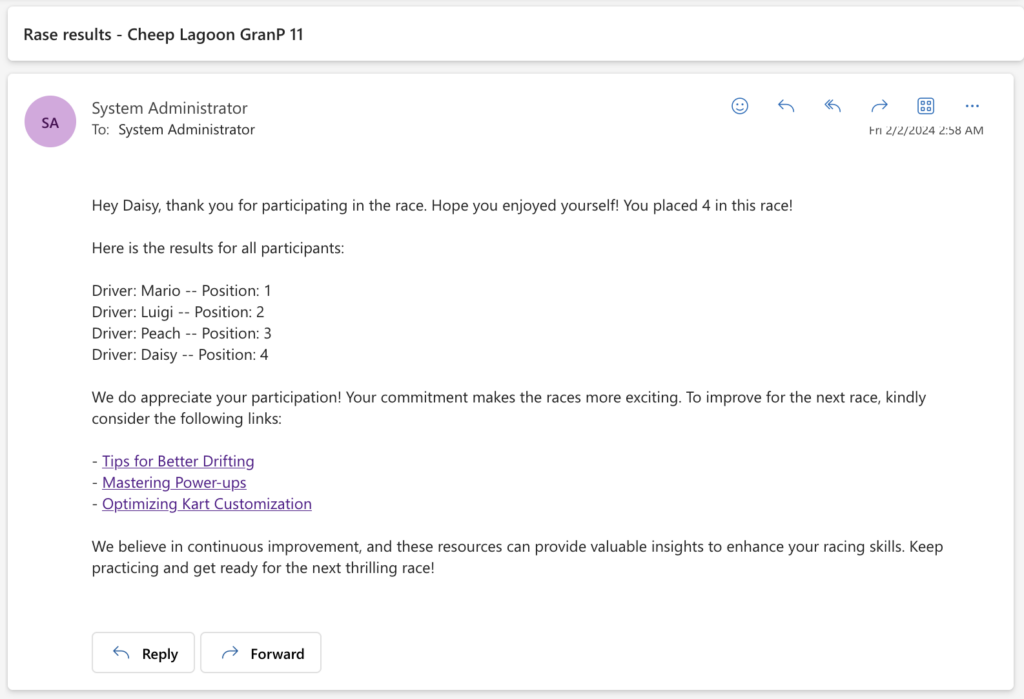
Automated Action: Personalized Results Our system automatically compiles, verifies, and emails a comprehensive summary of the race results to each participant. This quick, accurate information delivery exemplifies the power of automated workflows in a high-paced environment.
Enhanced Feedback for Continuous Improvement Crucially, we offer more than just results; drivers placed below third receive additional, personalized tips for improvement. This feature not only celebrates successes but also encourages skill development and growth among all participants.
Conclusion Earning the “Go With The Flow” badge symbolizes our strides in integrating cloud automation to streamline processes and enrich participant experience. It’s a testament to leveraging technology for better, faster, and more personalized race management.
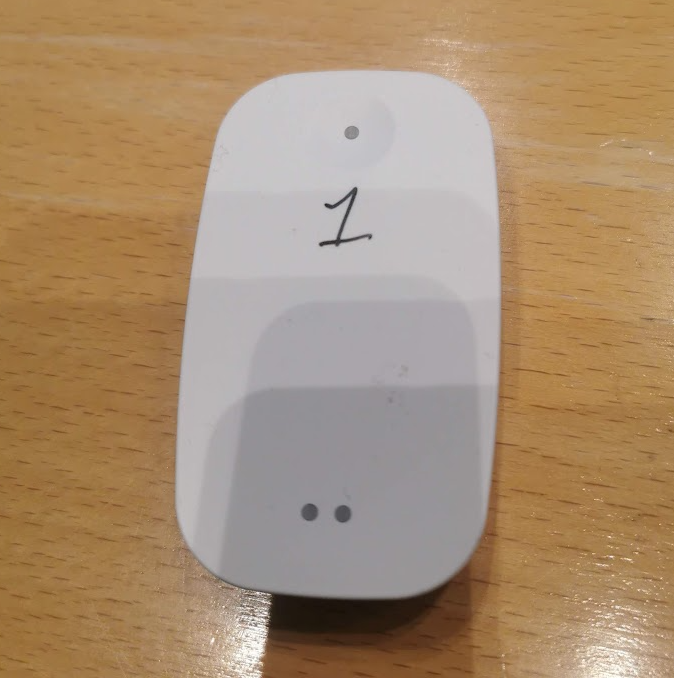
Our Canvas App is adding a function where you can “Call a friend”. The purpose of this function is to allow for voting. All of the buttons on the participant tables are rigged with voting functionality. (More of this will be visible the last day). For now we only use our personal button.
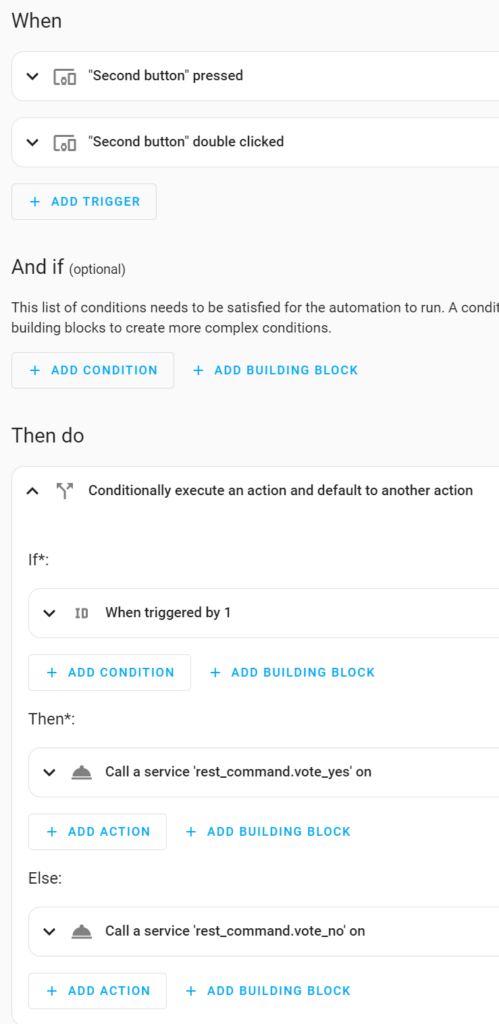
Single click on 2 stores vote for YES.
Double click on 2 stores vote for NO
This data is stored in Dataverse in a table we called votes:
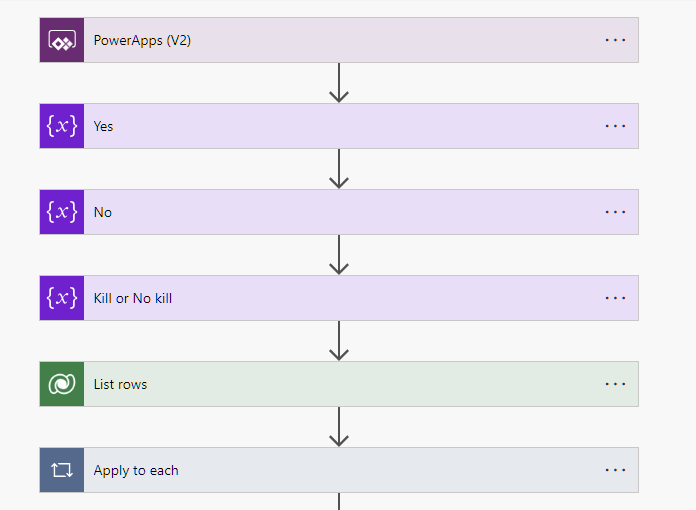
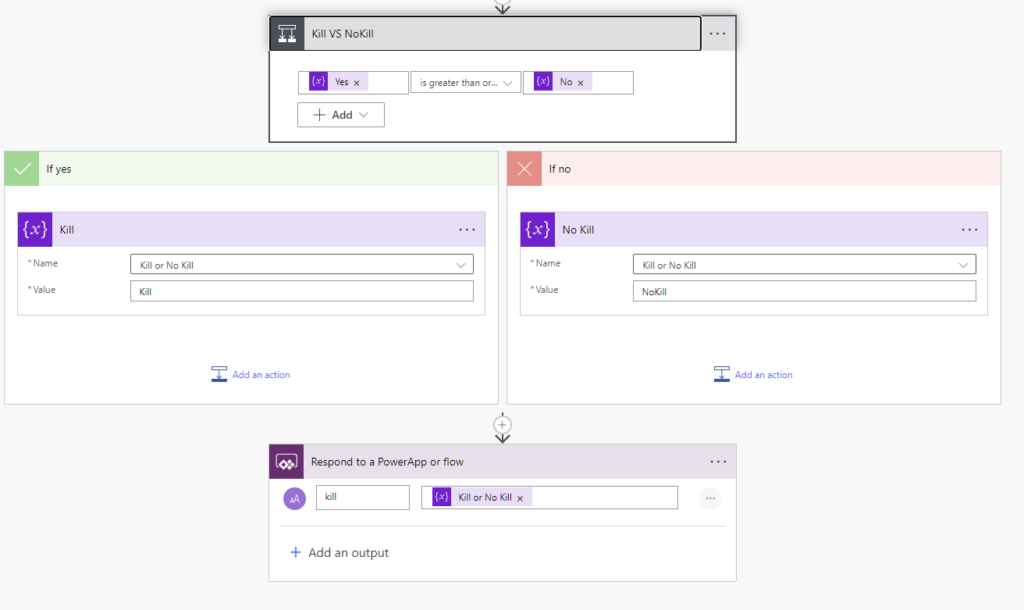
When the Power App calls the voting service, it will respond with the total tally of Yes or No to kill the BAD GUY
Plug N’ Play – for Dynamics 365 plugin that updates Mario for each support request based on the context using OpenAI
The Existential Risk – for AI decision making and work assignment without human involvment
Go With The Flow – for automating of the technician assignment
Crawler – for an innovative approach of searching for the right Mario technician
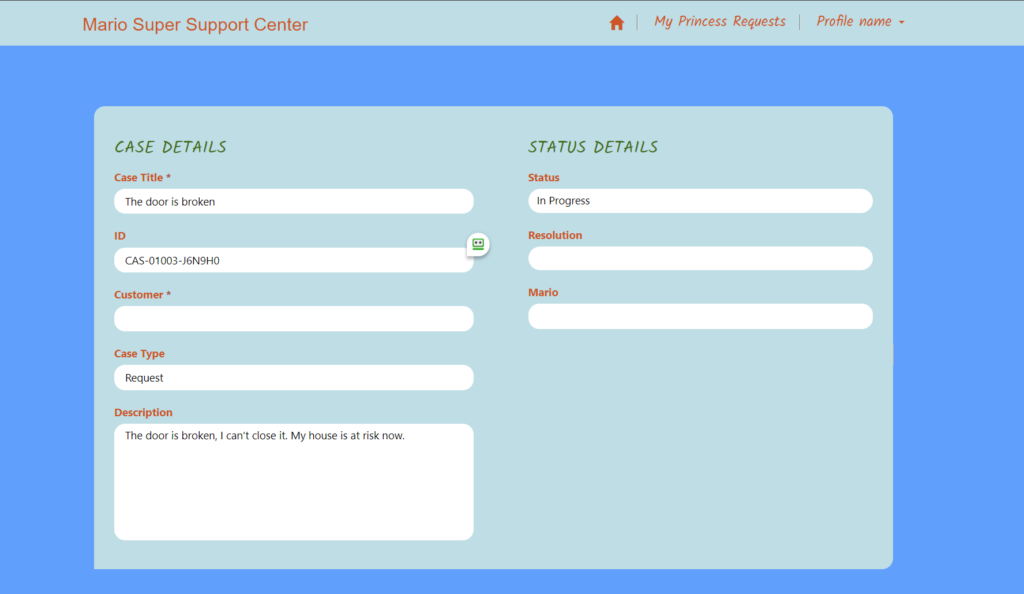
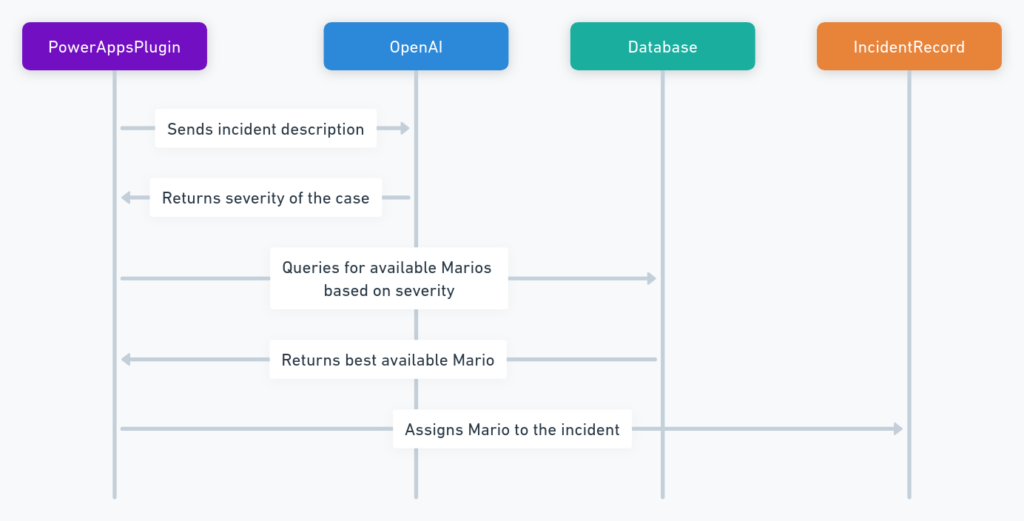
Sometimes Princesses are confused and don’t know where to start from when they have technical issues. So we are here to help them with AI! Princesses just need to add the description of the problem and the Dynamics Plugin will suggest Marios that are currently available and best match the case.
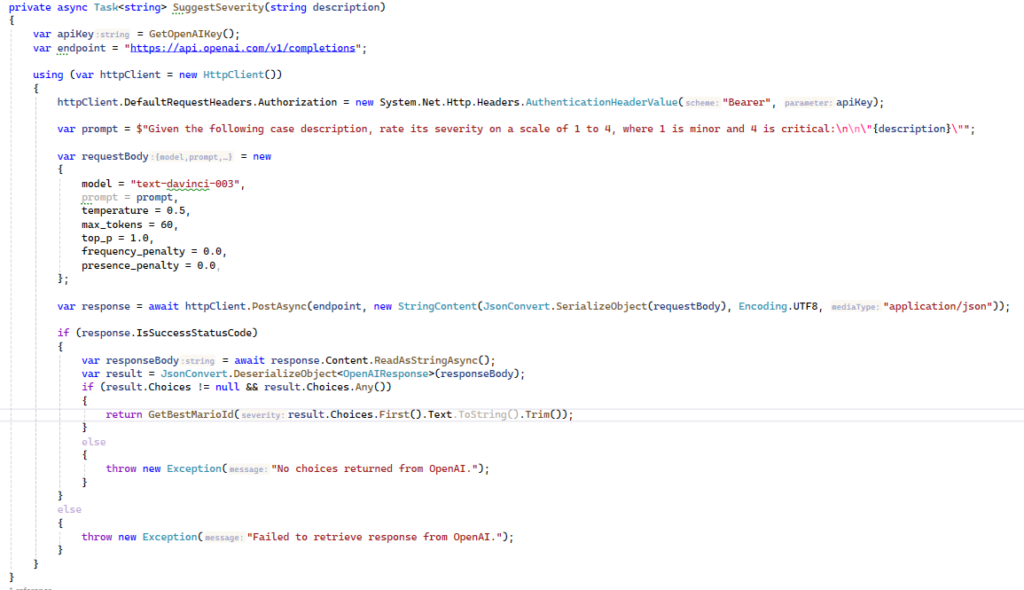
So the Princess creates a new support request, and that’s were plugin is triggered. The plugin sends the problem to OpenAI’s smart ChatGPT. The prompt: Given the following case description, rate its severity on a scale of 1 to 4, where 1 is minor and 4 is critical:
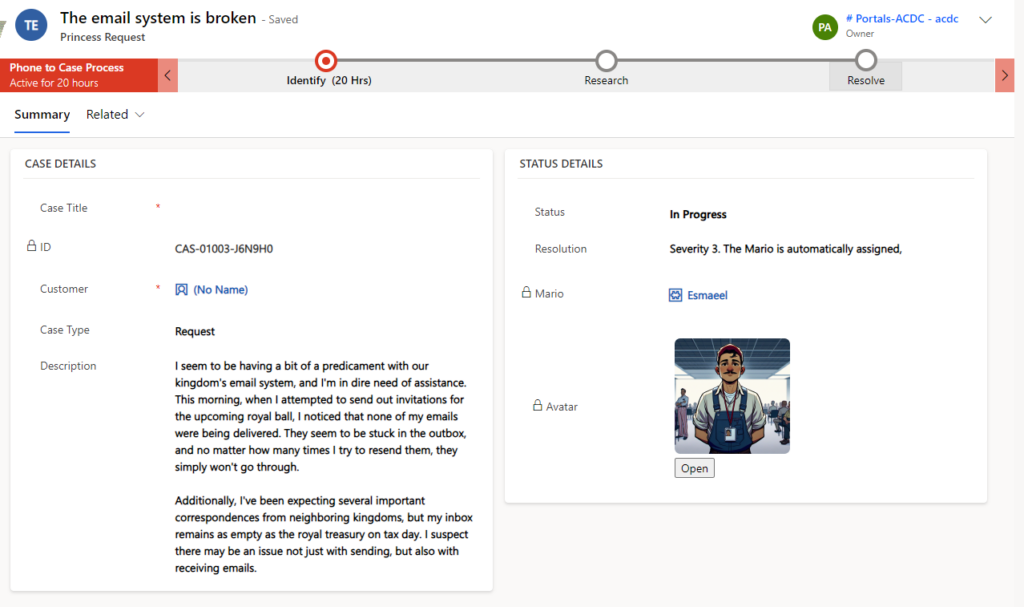
I seem to be having a bit of a predicament with our kingdom’s email system, and I’m in dire need of assistance. This morning, when I attempted to send out invitations for the upcoming royal ball, I noticed that none of my emails were being delivered. They seem to be stuck in the outbox, and no matter how many times I try to resend them, they simply won’t go through.
The result of the OpenAI request is the severity level, in our case it is 3. So the plugin is looking for Marios who can cope with this severity and assigns the case to this Mario. Also, plugin updates the details of the case:
It is an extraordinary way to search for an engineer, but also a risky for administrators of the support team, as AI is taking away their job! On the other hand – it follows the flow and automate the routine process, which is a major benefit for the business itself….
We are already building a certification app where aspiring plumbers can complete levels to achieve the PLumber Certifications; PL-200, PL-400 and PL-600. As described in the linked blog post, a flow to create a badge in sharepoint is triggered when the level is completed. That flow has been modified by adding an action to create a diploma with ChatGPT.
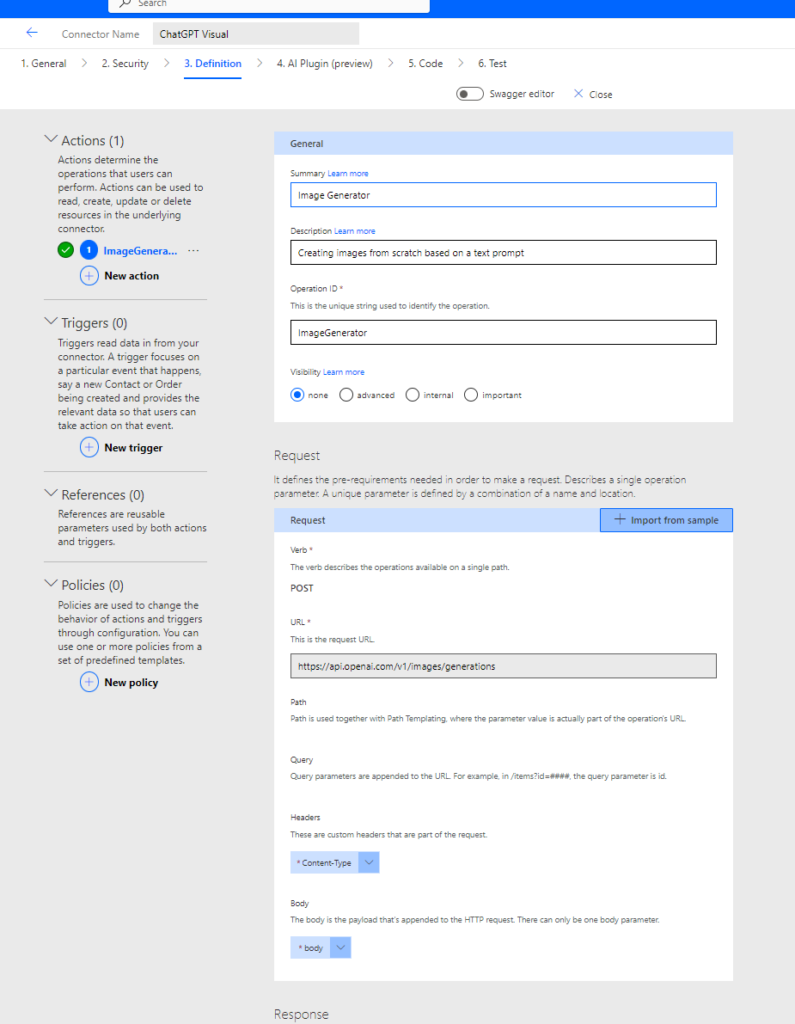
We created a Custom Connector for OpenAI API i Power Automate to be able to access image generator.
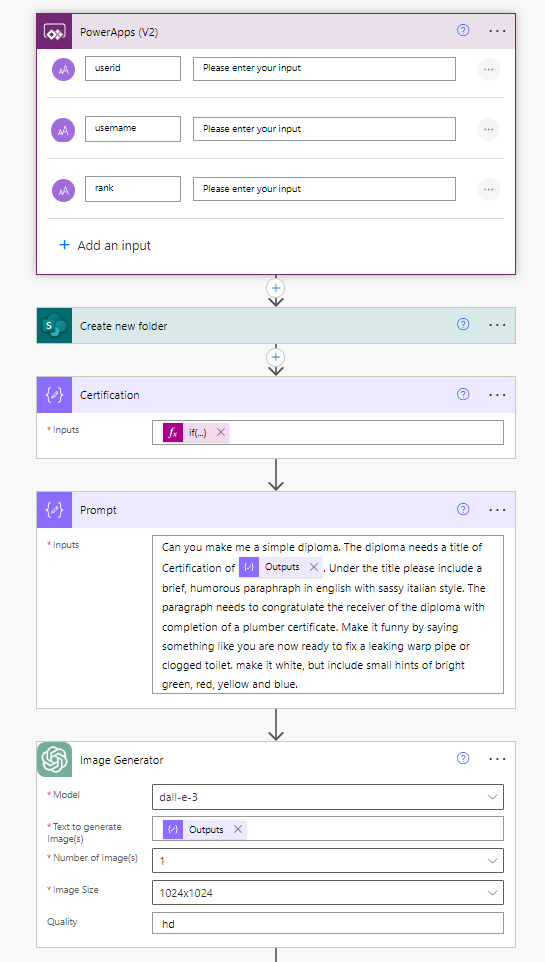
The custom connector is added as an action in the flow. By getting the rank input from the trigger, we set the certification (rank 1 = PL-200). A prompt is added to the Image Generator-action, as well as other inputs (notice the quality input is set to “HD”). When the inputs are added, you can just Go With the Flow…
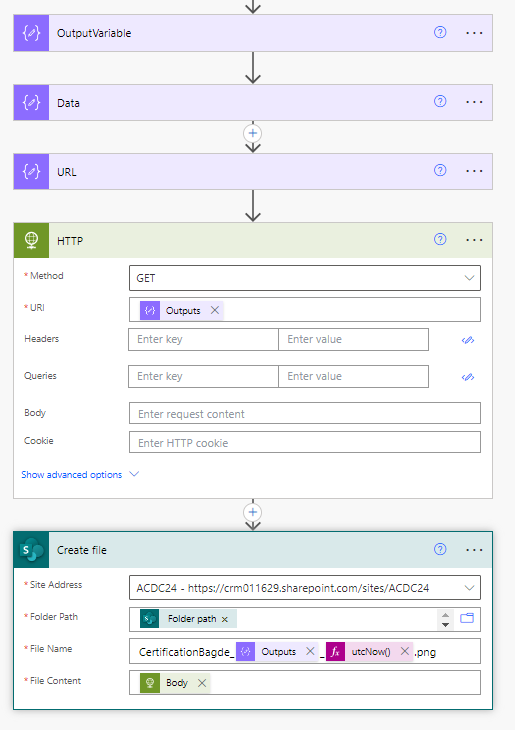
The URL of the Image Generator-action is added as file content to the new sharepoint file.
Each diploma is different every time it’s generated, making it impossible to replicate. This adds an element of exclusivity and value to the certifications earned through our app. You never know what to expect, much like something you might unearth from Pandora’s Box. The Excellent User Experience and Killer AI is impossible to overlook.
Take a look at two extraordinary certifications examples down below. Are your eyes just as blinded by The Glossy Pixels as ours?? Just look at the HD quality… And isn’t the italian typos a charming effect?
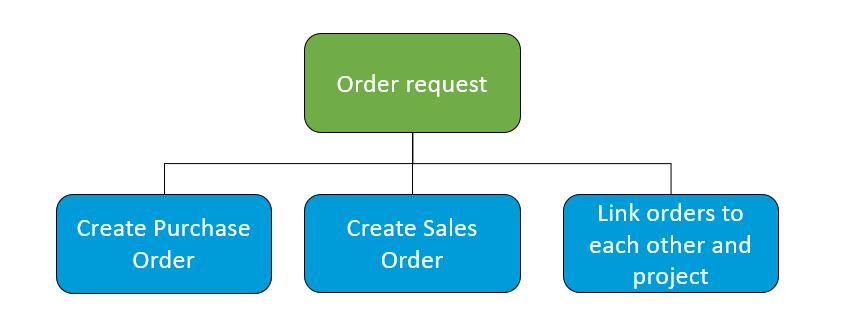
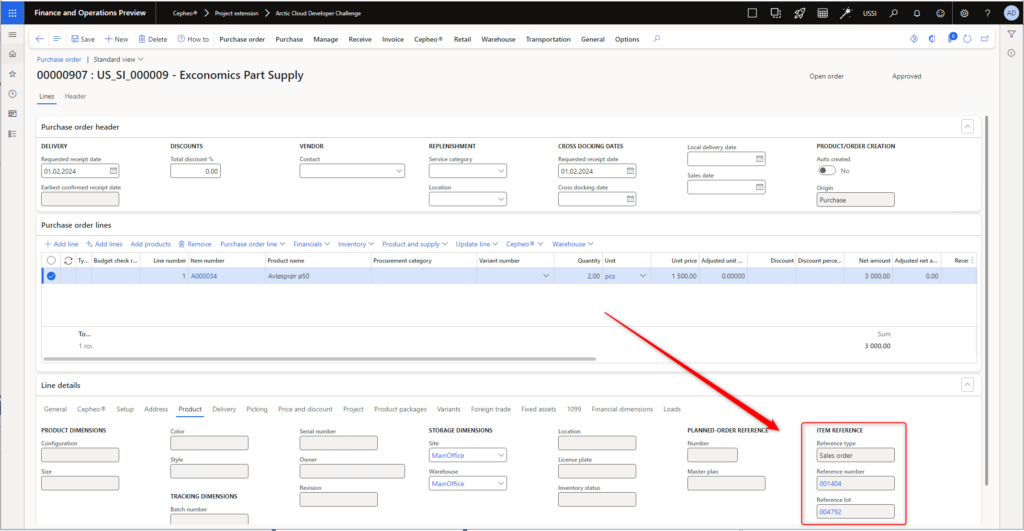
In the spirit of KoopaKonstruct, we leveraged Power Automate to streamline the order request process. When an order request is sent into FinOps, our Power Automate workflow springs into action, automatically triggering creation of both sales and purchase orders and linking to project. What makes this journey truly exciting is the dynamic linking of these orders based on material availability.
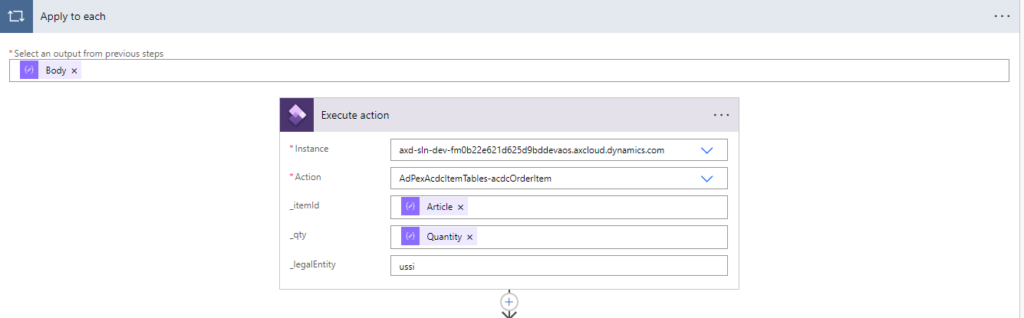
Using Execute action we send and retrieve critical information about items and order quantity with FinOps:
Konstructing the Perfect Order
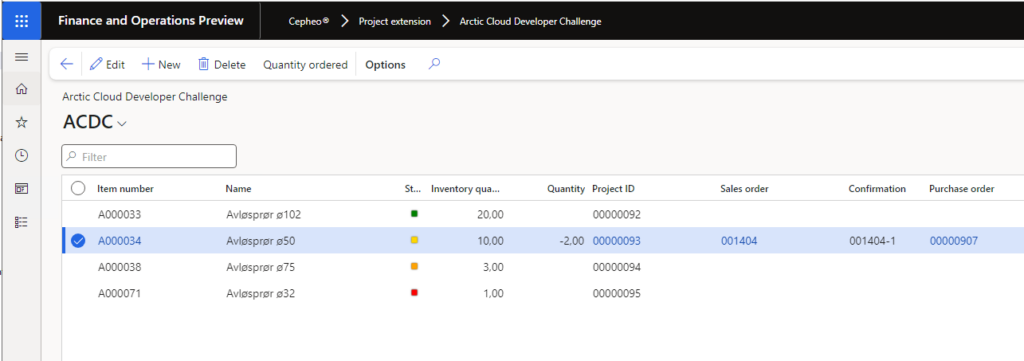
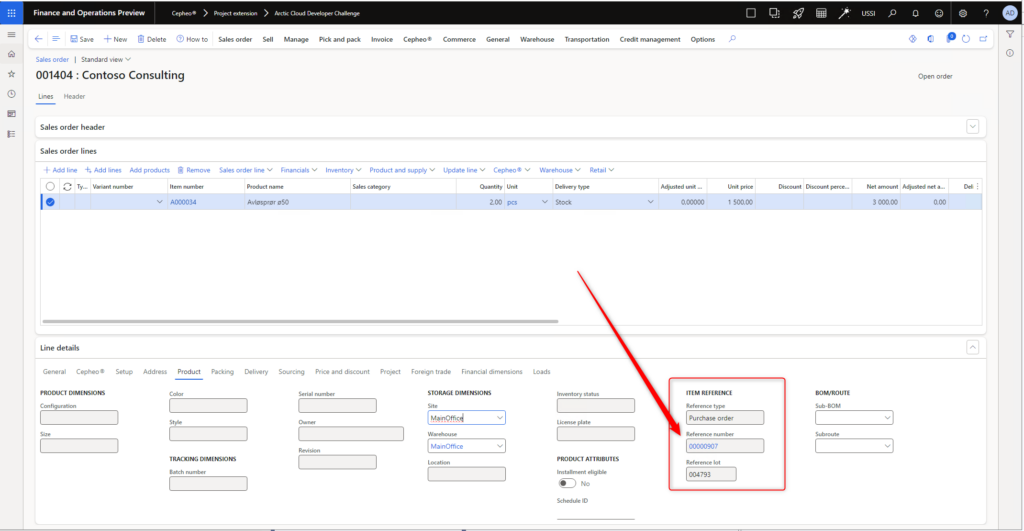
Here’s how it works: If materials are not available, a sales order is crafted alongside a corresponding purchase order. The two are linked together, creating a seamless flow that ensures efficiency and accuracy.
The Power of Projects
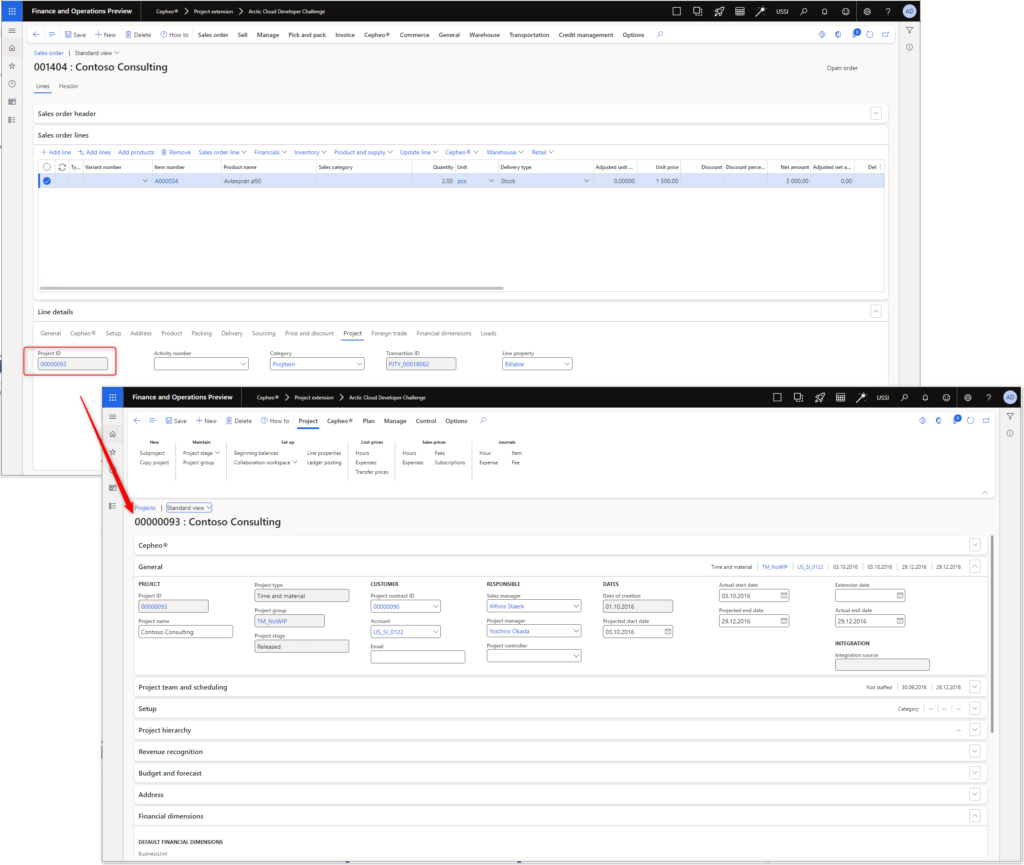
But that’s not all! In the Mushroom Kingdom of business productivity, projects play a crucial role. Our solution goes beyond order creation – both sales and purchase orders are intelligently linked to projects. This feature provides enhanced visibility and control over every aspect of the workflow, ensuring that each adventure contributes to the success of the larger project quest.
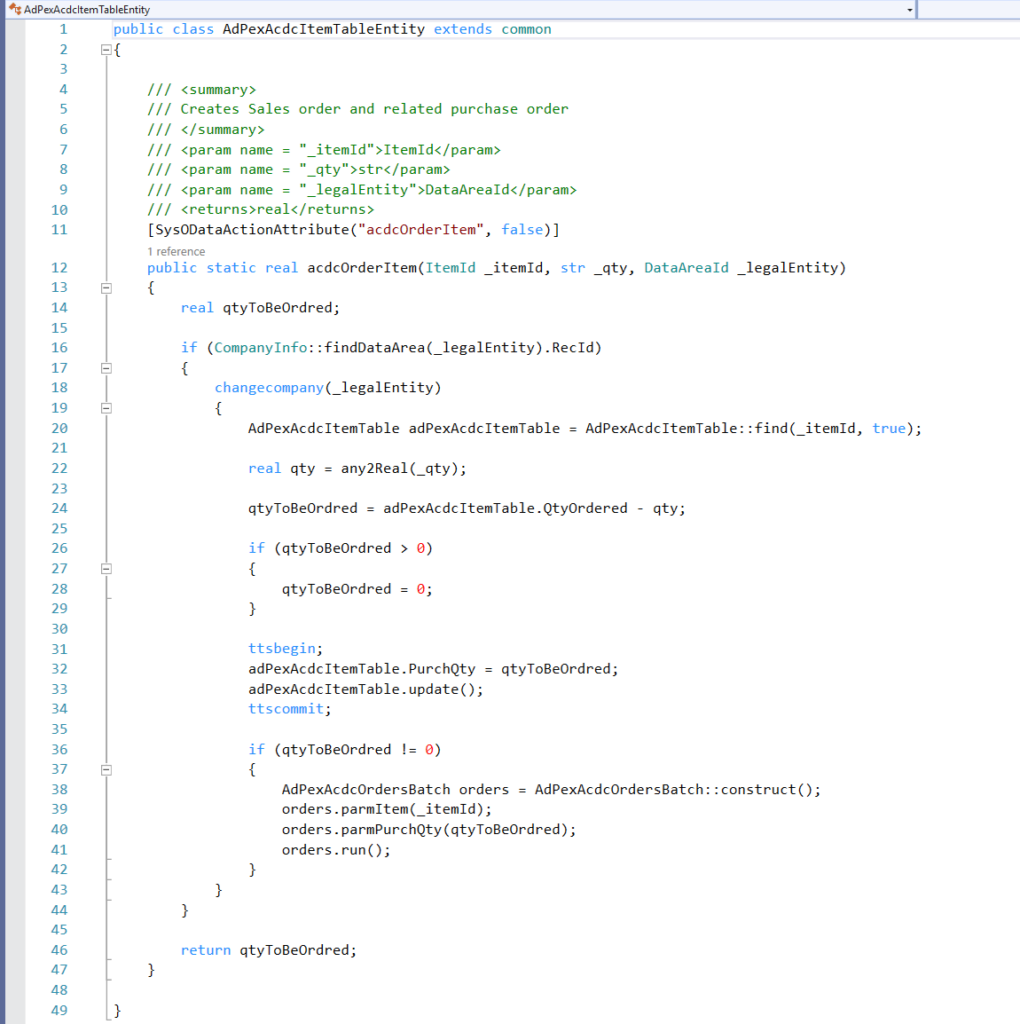
Behind Her Majesty, the FinOps itself, we can find all the Koopa-magic (read: pro code customization):
Power-up Delivery!
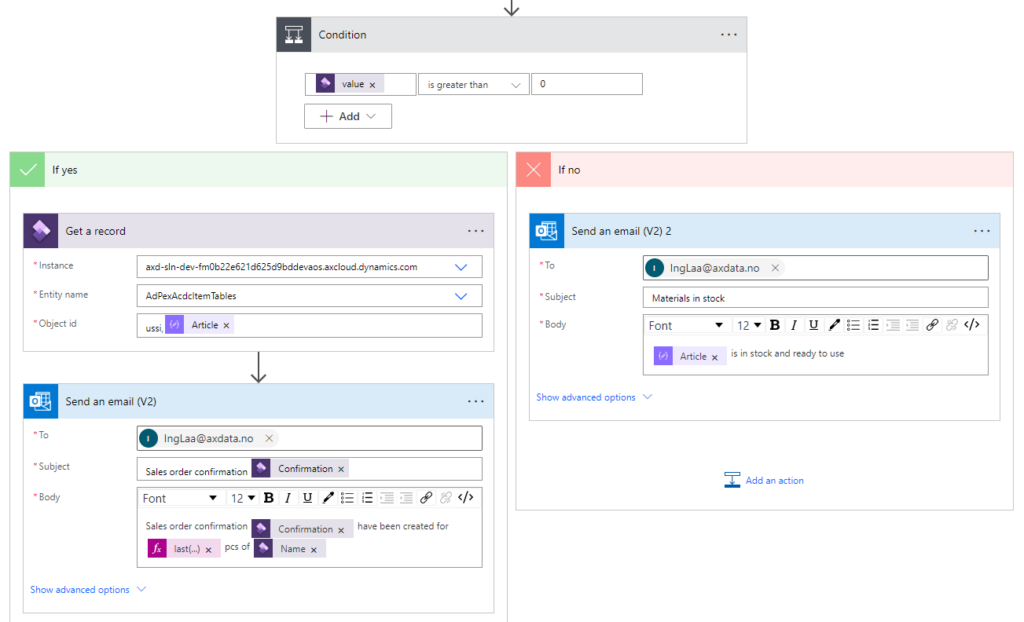
As soon as your orders emerged victorious from the crafting chamber – or FinOps if you may – Our speedy Toad couriers, equipped with red hats and jumping prowess, are on a mission to deliver your Order Confirmation straight to your inbox! They dodge Goombas, leap over pipes, and ensure your confirmation reaches you in warp speed!
Conclusion: Leveling up with Power Automate!
In the world of business operations, automating workflows is like discovering a hidden 1-Up mushroom. With KoopaKonstruct Manager, our team has not only embraced the challenge but emerged victorious, proving that the right automation can turn any business quest into a successful adventure #Go with the flow #Power User Love