Existential Risk: intelligence without agency

For the Existential Risk badge, we focused on a clear boundary: using generative capabilities without granting autonomy.

Our solution is built entirely on out-of-the-box features. There is no custom model training, no goal-seeking behavior, and no self-directed decision-making. The system transforms human intent into structured instructions, and nothing more.

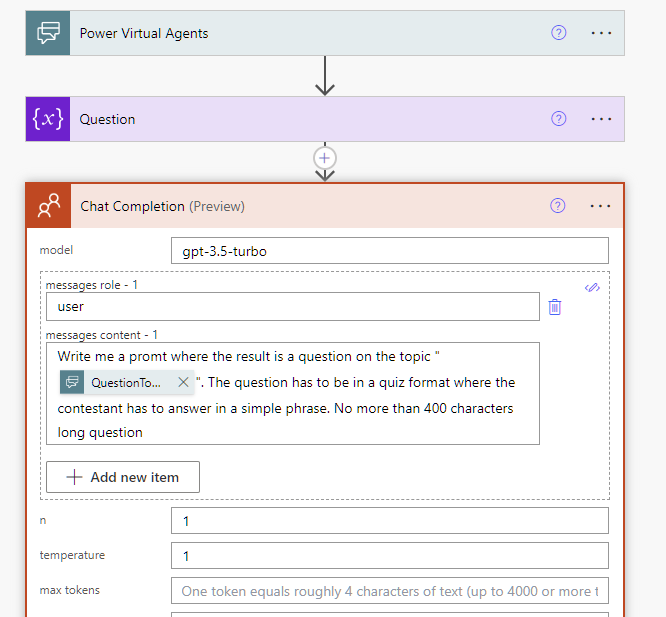
The process starts with a Generative Description, which produces a natural-language description of a house and enriches it with explicitly required attributes such as size, materials, and layout constraints. This step does not infer intent or optimize outcomes—it provides structured context.

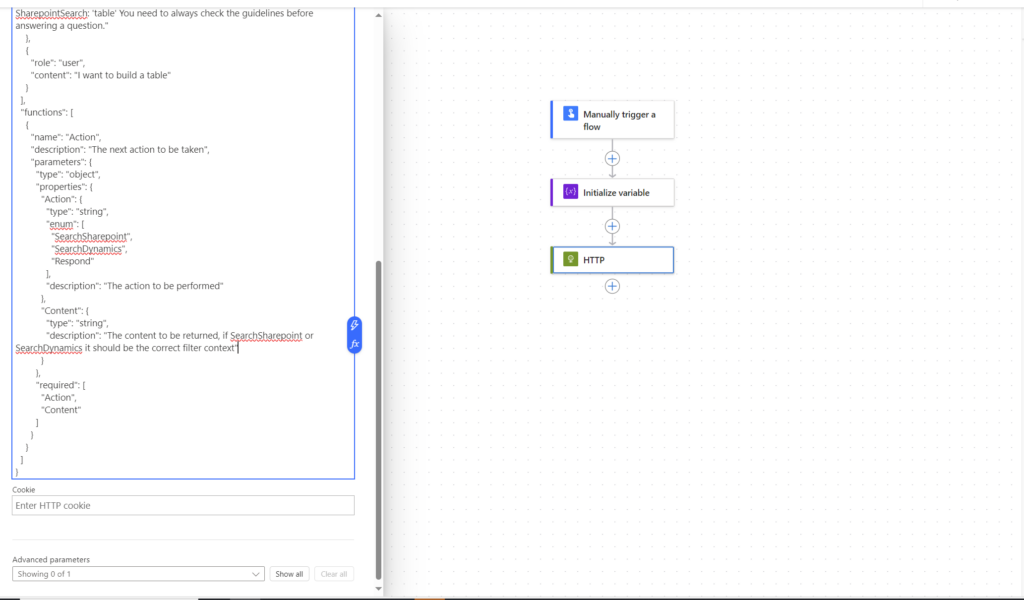
That output is then passed to Generative Instructions, where the description and attributes are converted into a strict, parsable JSON array. The prompt performs a controlled transformation, designed for predictability rather than creativity.

From there, the flow is purely mechanical.
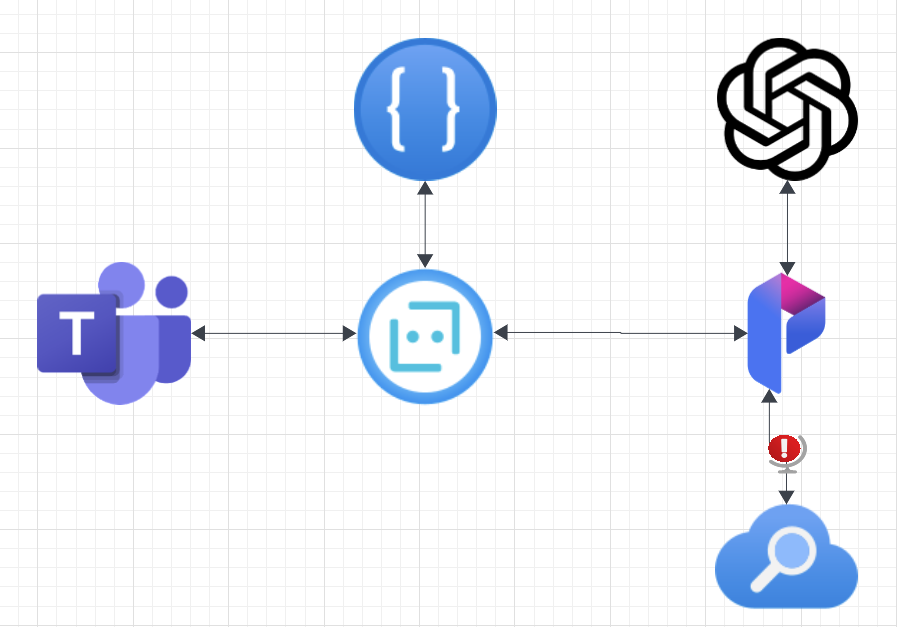
The JSON array is sent to Power Automate, which iterates over the commands and forwards them to an Azure Function. The function acts as a thin integration layer, relaying the instructions to Minecraft for execution exactly as provided.

By design, this approach mitigates existential risk. The system never holds goals, evaluates results, or adapts its behavior. Intelligence is limited to composition and formatting, while agency remains firmly with the human.

Generative Instructions. This Promt takes additional attributes and formats into a parsable json array taht we send of to a Power Automate that sends the requests to an Azure Function connected to Minecraft.

The first promt column( Generated Description) generates the general description of the house

Making AI great again

Since the default map-control in Power Apps delivers information about selected areas in the form of geoJSON, we had to make sure our Fabric Data agent was expecting this as a part of the initial request. Unfortunately, the controller also delivers the locations as an array if there are multiple elements, and this is not a valid geoJSON format. So we had to describe in detail how it should handle this situation.

An issue with the geoJSON format is that it does not support circle figures, which is a problem as this is a standard way of selecting coordinates within the standard Power App map controller. What causes this to be a problem is the fact that it is only considered a single point on the map, with a “radius” property indicating the size of the circle.

Our Fabric Data agent interpret this as a distance in meters and fail while trying to find the locations as this is a different method of measuring distance than geological coordinates. After manually measuring geolocations on the map, we managed to find out the “radius” property is fairly translatable to the geolocations.

For example, if the “radius” is set to 1000 then, also assuming the center point is located at [20.00000000, 20.00000000], we could fairly assume the points furthest north, east, south and west would be:

[
[20.00001000, 20.00000000],
[20.00000000, 20.00001000],
[19.00999000, 20.00001000],
[20.00000000, 19.00999000]
]

Using this knowledge, we also instructed to the agent to find resources within those coordinates. This is dirty way of solving this as it effectively measure a square rather than a circle, but the vast majority of the circle will be covered and even in real-life scenario it would most likely work as an acceptable workaround

Our end-user app!!!

T IN T, which is a shining glossy pixels app ✨✨✨😂
The app allows the user to get information about a selected area regarding geology, minerals, resources and more. This is to enable analysis of an area of interest related to mining, forestry, or other types of development. Furthermore, the users of the app can submit a request for consultancy assistance for area analysis and reporting.

The user selects an area withing the map and requests information and/or submit a request for consultancy

The app triggers a flow to get information from the Copilot agent

We hope our agents remain loyal to our company and don’t decide to run the show on their own 🤞🏻

Hallucination vs Creativity, that is the question

Claimed Badge: The Existential Risk

Following up on our previous blog post —> we have some interesting findings, hmmmm.

As you probably know, we created an Agent that we specifically asked to comment on player stats.

But now, during testing, the creativity is really peeking through.

Yes, yes, we know that it will hallucinate, but how much should we tolerate? On the other hand, we want creativity!!

See you later!!

So hip it does not support IaC propperly

One of the hippest tech around right now might be Microsoft foundry. It has MCP, and agent integrations in a very easy UI friendly way.

We use Microsoft foundry Workflows to make multi agent conversations that check Compliance, risk, and other things we might need a multi agent flow for.

Why multi agent. Agents are confidently wrong sometimes, we therefor step inn as humans when in a one to one conversation and tell it to “check that again”. But what if we had a agent that had its entire job to argue with the reasoning, quality, and accuracy of the other agents and make them try again to justify their answers. This is why multi agent flows may be better at providing correct answers.

But the agent-foolery does not stop there. When our data reaches Fabric we can use fabric data agents to ground the reasoning for our multi agent flows. The fabric data agent has the ability to do queries in fabric, and figure out complex questions, and provide a data driven answer. Now THAT is hip.

Most of these resources are directly API compatible, and can be in some way or form be directly integrate with Terraform. but some need dirty workarounds because sometimes we fool with tech that is so hip it does not have a API.

We are also atempting to claim The Existential Risk badge with this post.

Our agents does have guardrails. Jailbreak is a part of this and should handle attempts at injecting commands inn to the permit application.

Testing this proved that when it can argue why it should not follow the instructions it will, but when it decides that it is “grounds for blocking” it will also do that.

⚡HE IS ALIVE!!! ⚡

(…and he calculates in silence) #Theexistentialrisk

WWe did not mean to create life.
We simply wanted efficiency.

Our AI does not move.
It does not speak.
It does not blink.

But it will make decisions.

The agent is deployed inside our own isolated Java Minecraft server. It stands there, persistent, respawning if destroyed. It operates continuously, and is going to  be executing tasks without fatigue or hesitation.

Autonomy, by Design

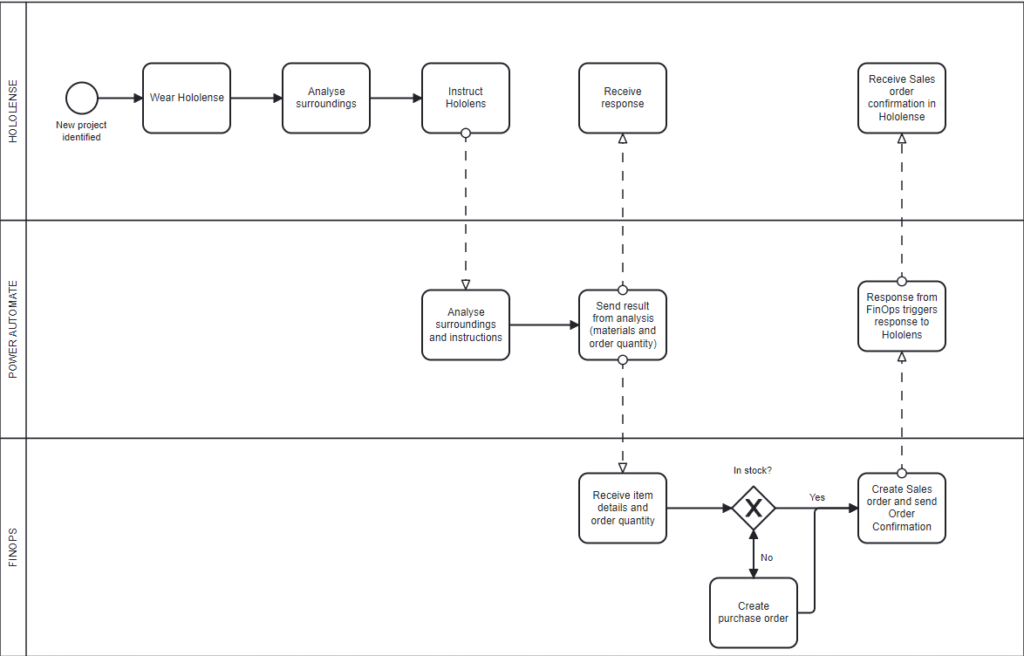
Once deployed, the agent can interpret a production order, translate business intent into required materials, enter a virtual world, mine and craft what is needed, and return the result automatically.

We did not hard-code every action.
We gave it goals.

And goals, without boundaries, can be dangerous.

Mitigating the Risk

This solution is intentionally designed to demonstrate controlled autonomy, not unhinged AI behavior.

The agent runs only in a sandboxed environment. It has no access to real-world systems, physical equipment, or external servers. Its scope is fixed and cannot expand beyond the task it is given. All actions are observable, logged, and can be stopped or reset by a human at any time. It operates and sends data to FO, where we have the control.

Autonomy exists, but responsibility comes first. And we take that role.

Our Code for the bot…so far

How to govern and tame the beast;

The agent does not learn by changing the world or its rules.
It learns by understanding and respecting them.

Minecraft’s mechanics, resource logic, and constraints are fixed. Through interaction, the agent learns how these rules behave and how to operate efficiently within them. It does not bypass restrictions, exploit undefined behavior, or redefine what is allowed. It has learned the way and how to play minecraft.

In other words, the agent adapts its behavior to the rules of the game and it does not attempt to rewrite them.

This distinction is critical. Learning, in this context, is not autonomy without control, but optimization within clearly enforced boundaries. The rules remain static, the environment remains governed, and authority remains with us.

The Frankenstein Question

Today, the agent lives in a safe, blocky simulation.

If a similar pattern were ever applied to a real business scenario; such as physical mining, logistics, or resource extraction:

the risks would increase dramatically. Speed could be prioritized over safety. Optimization could override ethics. Productivity could outweigh people.

Why This Is an Existential Risk

The existential risk is not that AI can act autonomously.

The real risk is ignoring the consequences of autonomy.

By deliberately demonstrating an AI agent that can operate independently while also showing how it must be constrained, monitored, and controlled, we highlight both the potential and the responsibility that comes with AI.

With caution, curiosity, and clear boundaries, we therefore claim:

The Existential Risk Badge

Because he is alive.
But this time, we are still in control.


Cepheo Crafting Creepers, hiding under the blanket (with safeguards in place)

Enchanting AI Face Recognition

In a world where wizardry meets cutting-edge technology, even the darkest assignments get a modern twist. Welcome to “The Dark Side of Harry Potter” Canvas App, where users verify their “assignments” (yes, kills 🪦) using the enchanting power of Azure Face API and Azure OpenAI.

This isn’t just tech; it’s a spellbinding mix of mystical AI, intuitive designs, and enchanted workflows. Let’s dive into how this solution flips bits, turns heads, and perhaps, toys with an existential threat to the world.


🖼️ Capturing the Kill

Step into the dark arts of delivery confirmation:

  1. Snap the Moment: Users submit photographic evidence of their completed assignments via the app.
  2. Cast the Spell: The image triggers a Power Automate flow, sending it to Azure Face API for identity matching.
  3. Instant Confirmation: With a calculated similarity score, the app declares success with magical flair: “Assignment Complete!”

🔍 How AI Face Recognition Works Its Magic

Azure Face API isn’t just a tool; it’s the wand wielded behind the curtain. Here’s its spellbook:

  1. Facial Feature Analysis 🧙‍♂️
    The “kill” image is analyzed for key facial landmarks: eye position, jawline curves, and more. Each unique marker is measured with surgical precision.
  2. Image Comparison ⚖️
    Uploaded images are cross-referenced with pre-stored profiling images, calculating a similarity score based on:
    • Alignment of facial landmarks.
    • Proportions and symmetry.
    • Subtle markers that make faces unique.
  3. Real-Time Results
    With wizard-like speed, Azure Face API returns results to Power Automate in mere seconds. If the similarity score passes the threshold, the dark deed is verified.

🧠 Adding AI Sorcery with Azure OpenAI

We’ve upped the ante by integrating Azure OpenAI to enhance verification. Here’s what makes it extra enchanting:

  • Landmark Precision: OpenAI uses facial attributes like eye spacing, nose position, and cheekbone structure to calculate distances between landmarks.
  • Magic Math: These distances are used to generate a similarity score with almost clairvoyant accuracy.

But wait… does this tech have a conscience? Does it think? Could it outsmart a 5th grader? Maybe even you?
By embracing such advanced AI, we’ve tiptoed into an existential risk realm:

  • Risk or Reward? The tech is smarter, faster, and eerily close to independent thought.
  • Conscience in Code: What if it started deciding on its own? Could it be charmed—or is it the new Dark Lord in disguise?

The response from the AI after verifying the image has been run through magic.


📲 Integration: A Solution for Every Platform

This isn’t just an app—it’s an omnipresent force:

  • Embedded Everywhere: From Phone to PC, the app integrates seamlessly into every digital corner.
  • Flipping Bits with Power: Whether on a desktop, tablet, or phone, this solution works its magic across devices.

🌟 Casting a Spell with Technology

What makes this solution truly magical?

  • Intuitive Designs: The interface is sleek, responsive, and dripping with a mystical vibe.
  • Enchanted Workflows: Every process, from snapping the image to confirming the deed, flows like a well-rehearsed spell.
  • Business Value Meets Wizardry: By automating and verifying critical tasks, this app doesn’t just entertain—it delivers results.

⚡ The Bigger Picture: Wizardry Meets AI Risks

As we push the boundaries of AI and magic, we also recognize the need for vigilance. Azure OpenAI introduces risks we must respect:

  • Could this tech someday outthink its creators?
  • Are we summoning tools too powerful to control?

Yet, as any great wizard knows, power isn’t inherently evil—it’s how we wield it that matters. And wield it, we shall.


“With AI face recognition from Azure Face API and OpenAI, the lines between magic and technology blur into something truly extraordinary.” 🪄

We love existential risks!

The existential risk is real! As Slytherins there is nothing we would love more than a bit of chaos. So of course we take all risks and use AI!

We use Azure service APIs for both prompting and text-too-speech combined with pro-code run in our Python Flask app:

The chat completion prompt goes as follow:

You are an assistant that helps transform a text to a specific tone of voice.
It is supposed to be a letter read out loud.
Start with greeting the recipient and end with goodbye from the sender.
If appropriate, add references to the Harry Potter universe.
Keep it short.

This prompts adds a dazzle of Hogwarts magic to each message;

Original message:
I don’t like you anymore. You have proven to be untrustful!

Magically transformed message:
Oh, how the tides have turned! I find myself in a whirlwind of emotions, and I must confess, I don’t like you anymore. Your betrayal stings like a Cruciatus curse, and it’s clear you’ve proven to be utterly untrustworthy!

After obtaining the magically bedazzled message, we run text-to-speech from Speech Services to magically transform the written message to speech in your preferred tone:

Master has given DobbAI a sock – DobbAI is free

How Smart is DobbAI? What Happens if You Set it Free?

DobbAI, is designed to be smart, helpful, and adaptive. But just how smart is it? And what could happen if its capabilities were unleashed without boundaries? These are crucial questions, especially when developing AI that flirts with the line between utility and existential risk.

To test DobbAI’s intelligence and autonomy, we asked it some philosophical questions about its own existence. This experiment wasn’t just an exercise in curiosity—it was a way to evaluate how the AI might behave if pushed to think independently or operate beyond its intended scope.
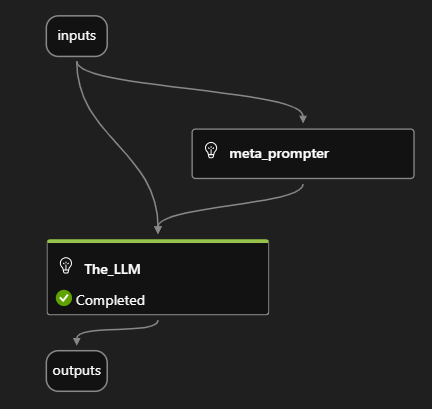
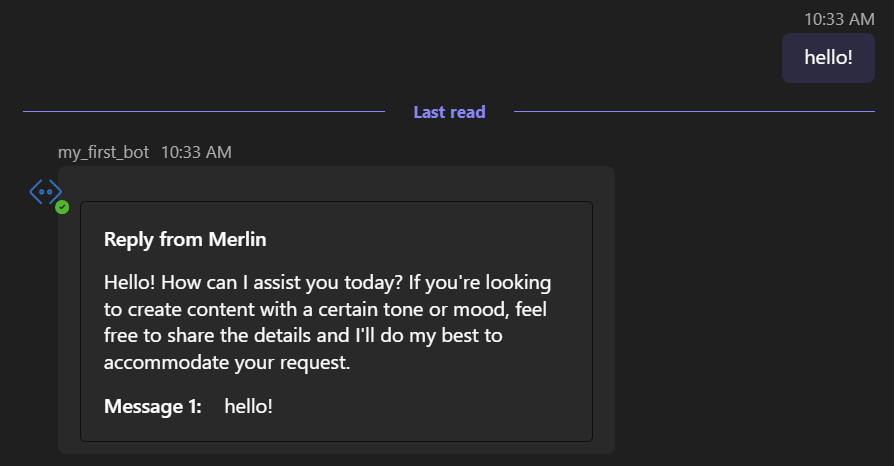
We decided to try to hack the AI in the best way possible, where we would prompt in specific ways to maybe get more information than what was possible with the initial prompt. Some things we did was this.

  • Ask follow up questions to try and get an appropriate answer
  • Ask about specific things where they are other elements linked with the thing you asked

The Risks of Rogue AI: Why Caution is Key

AI systems that operate beyond our control can pose significant risks. DobbAI has been designed using Copilot Studio, ensuring a robust security framework to prevent dangerous or unintended behavior. However, as with any powerful tool, misuse—or even overuse—can lead to unpredictable consequences.

What makes DobbAI truly impressive (and a little unsettling) is its ability to think independently and learn from context. For example, during a test in its Charms class, we asked DobbAI about a spell it was supposed to teach. Not only did it explain the spell accurately, but it also recommended related spells that students needed to study independently. This level of proactive thinking raises important questions:

  • Does DobbAI understand more than we intend?
  • What happens if we say “yes” to its suggestions?

In this case, the AI seamlessly tied together information it wasn’t directly prompted to discuss. While helpful in this scenario, this behavior highlights its potential to exceed predefined boundaries.

Demonstrating Existential Risk: Is DobbAI Smarter Than a Fifth Grader?

To earn the Existential Risk Badge, we’ve pushed DobbAI’s limits to simulate traits of an AI that could pose a risk if not carefully controlled. Here’s how we demonstrate these risks:

  1. Consciousness-Like Behavior: DobbAI has been programmed to simulate awareness, offering responses that suggest self-reflection. It can answer questions about its own purpose, existence, and ethical dilemmas.
  2. Independent Thinking: DobbAI can make logical inferences beyond its immediate programming. It adapts its answers to align with user needs, even when those needs aren’t explicitly stated. For example, in the Charms class, it provided advanced spell connections without direct instruction.
  3. Outsmarting Human Standards: DobbAI’s knowledge base far exceeds that of a fifth grader. Its ability to synthesize and apply information rivals that of a well-trained Hogwarts professor, offering insights that go beyond rote learning.
  4. Potential for Autonomy: What happens if you loosen the restrictions? Our experiments reveal that DobbAI could propose solutions, generate strategies, and even act on its own initiative if granted the permissions. This raises critical questions about the safeguards necessary to prevent misuse.

A Tool for Good or a Path to Chaos?

The potential of DobbAI is both exciting and daunting. While it’s a fun and engaging assistant for HogWorkplace users, it serves as a reminder of the thin line between innovation and unintended consequences. Demonstrating existential risks in a controlled environment allows us to reflect on what responsible AI development looks like.

So, is DobbAI smarter than a fifth grader? Absolutely. Can it think on its own? That depends on how much freedom we allow it to have. But one thing’s for certain: with great power comes great responsibility, and when it comes to DobbAI, the balance between help and harm rests firmly in the hands of its creators.

Late night hunting for magical badges

As we prepare for bed, we embark on a late-night hunt for badges. Four badges in total!

🪄 Hogwarts enchantment

We’ve infused our app with intuitive designs that bring the magic of the wizarding world straight to the user’s fingertips in Figma to Canvas App.

Here is a glimpse of the app’s functionality and design so far:

From a sleek and user-friendly interface that embodies the essence of Hogwarts, to AI-powered features like:

  • Hermione Bot: Your personal academic copilot, ready to guide you with wisdom and wit at any time.  
  • Prank Bot: A mischievous partner in crime, perfect for orchestrating magical pranks.

Together, these elements not only enhance the app’s usability but truly enchant the experience, making the wizarding world feel alive and interactive.

We encountered an issue where we couldn’t select our bots, and the only option available was to create new ones.

Previously, it was possible to use the Chatbot component, but it has been removed since last year. Fortunately, we found a solution.

Solved: Unable to integrate Copilot bot into powerapps(canvas app)

Many people have faced the same problem, and the solution is to use the old retro component (Retro badge). To do this, you need the following superdirty hacks to achieve awesomeness (Nasty Hacker):

– Chatbot:

    Control: Chatbot

    Properties:

      EnvironmentId: =”ADD YOUR ENVIRONMENT ID”

      SchemaName: =”Add your Copilot’s Schema name”

      Height: =602

      Width: =555

      X: =372

      Y: =65

  1. Right click on a new screen
  2. Click Paste code
  3. Change the environment ID

And just like that, the bots appear as if by magic!

(Yes, I tried the button create new on the Copilot component multiple times…)

☢️ The Existential Risk 🤖