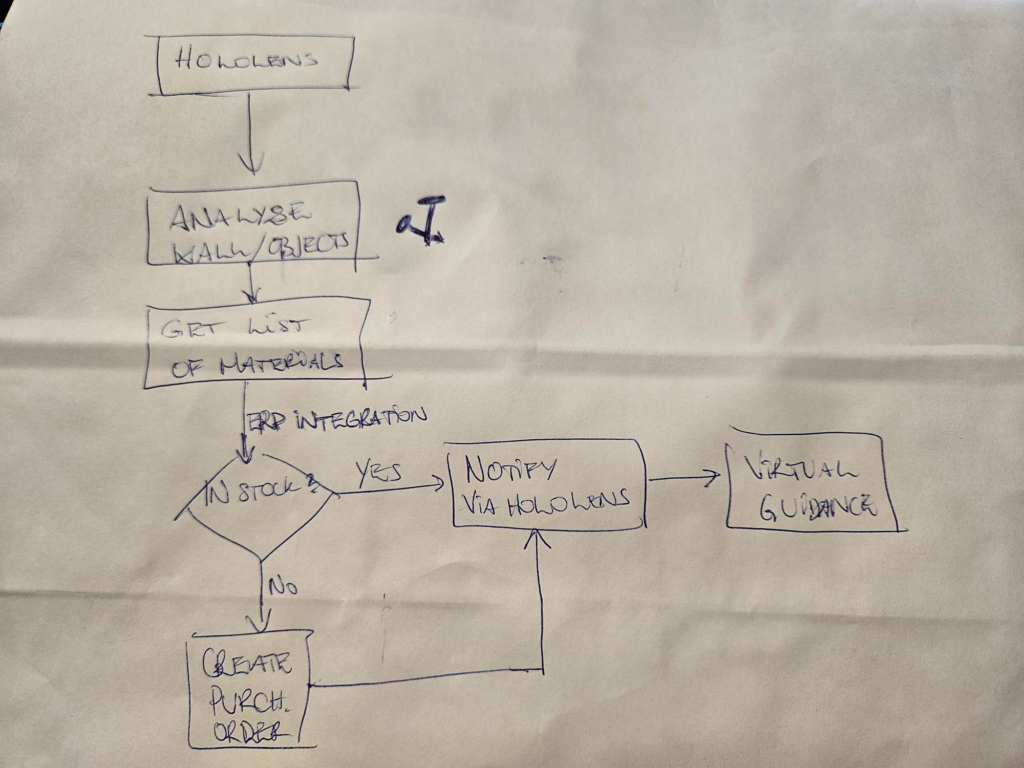
Behold our stellar user experience and business processes depicted in this rad and snazzy sketch!
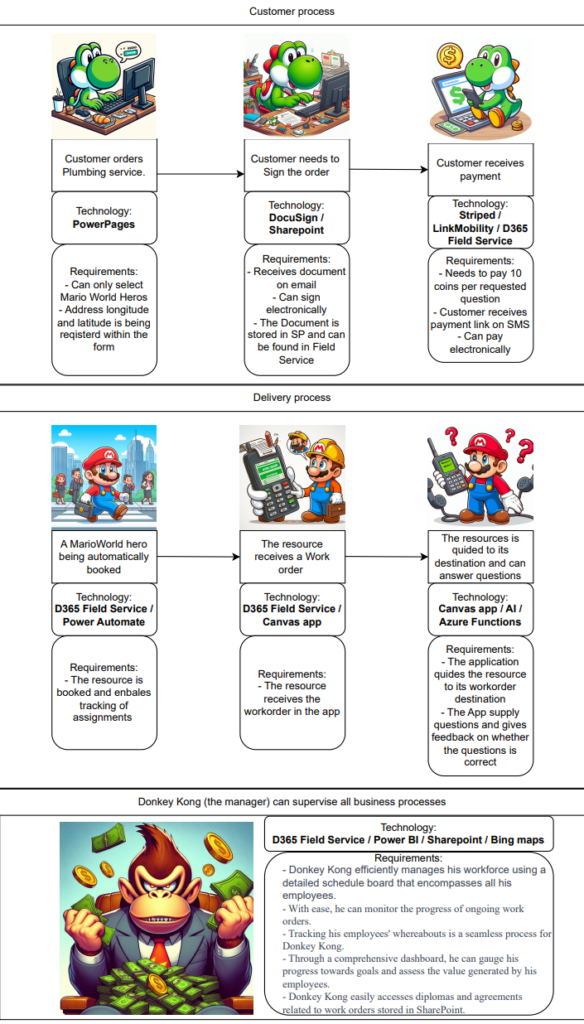

Behold our stellar user experience and business processes depicted in this rad and snazzy sketch!
Imagine coming home from work and all you want to do is play a game to relax. Only problem is that new games are expensive and you can’t afford to buy all of the games that come out. You have opened your Steam Account and are looking at the list of games you have beaten many times before.

Out of the blue you see a new game that is free and promises a dynamic experience you have never seen before
Donkey Kong’s Amazing Adventures
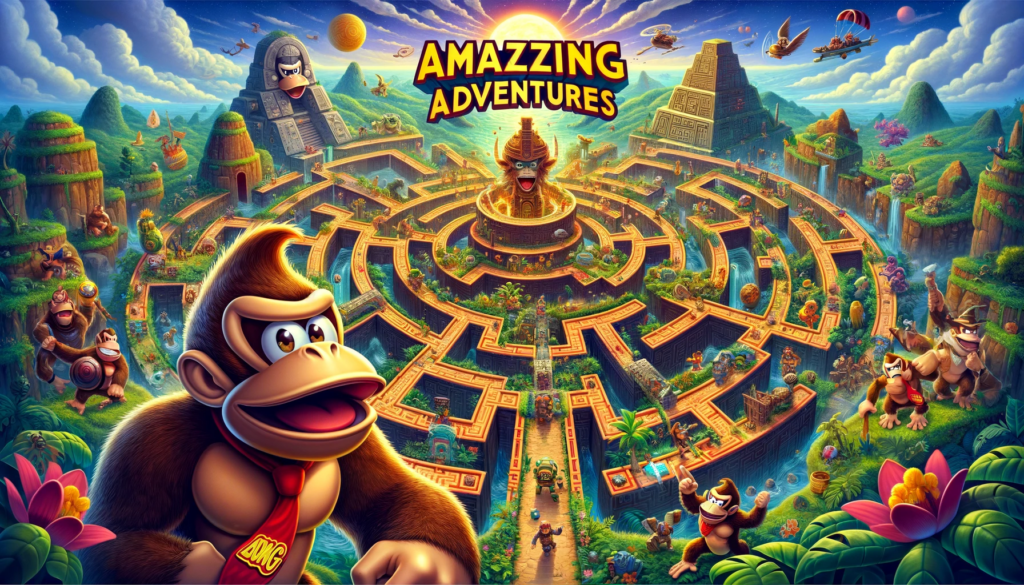
The idea of the game is to dynamically change based on the users input. The first thing a user is presented with would be the chat dialog to define inputs
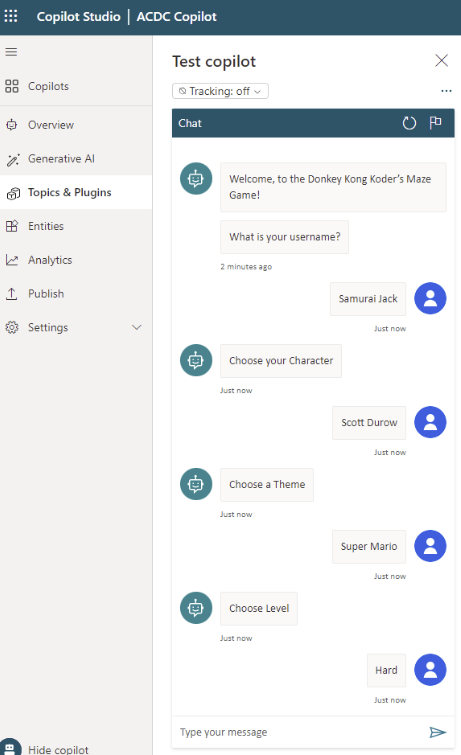
The user input is then translated to predefined Promts in Power Automate.
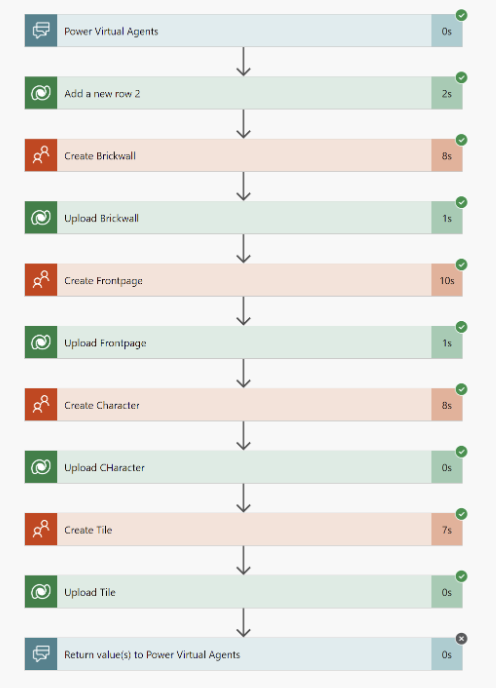
All data is stored in Dataverse for statistical purposes and is used when the application loads. When opening the game, the game configuration is loaded, and your custom experience is ready to be played.
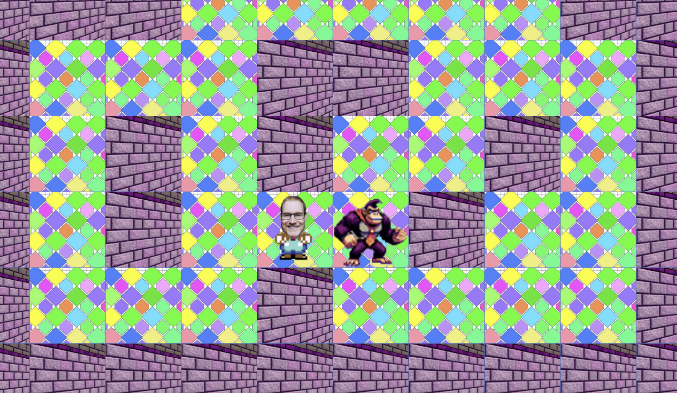
An example of a configuration where Scott is the main character and the theme was similar to Mario’s Rainbow Road. The board setup is dynamically written from AI based on the user input (Easy , Medium , Hard).
After completing the game you will be presented with a list of high scores to further the competitive spirit gaming.
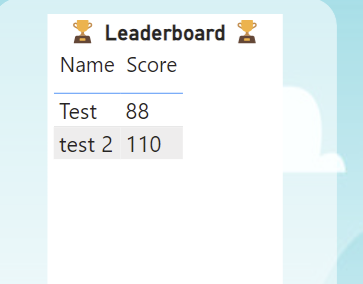
More to come, so stay tuned for lots of feature updates!!!
Not every journey has to end, and why should Jan’s?
This raw sketch is just the beginning – what more to come? Stay tuned.
Backstory: After a life of dangers, princesses and adventures Mario and Luigi returns to their family business: Super Mario Bros Pluming.

Unfortunately, the marked has changed. Simple brick and mortar businesses are no longer cutting it. What we need is something new, what we need is a service, a service with multiple revenue streams… A service with recurring revenue… What we need is Plumbing as a service (PlaaS)! Its here the Evidi Power Platform Plumbers comes to the rescue!
The plan:
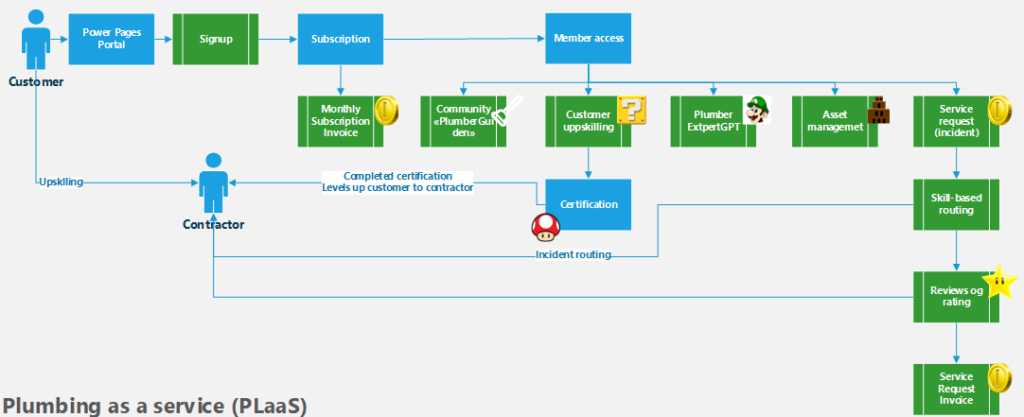
The basic plan is us the Power Platform to offer a subscription service for home and castle owners in need of pluming services. For the low cost of 600 a moth you get access the wealth of services:
Community: “PlumberGuiden”
This is a vibrant community with real human members where the customer can ask and receive answers to basic, and complex, pluming issues.
Plumber ExpertGPT
Offers an instant, AI-driven advice on diagnosing and fixing common plumbing issues, providing step-by-step guidance with an authentic Italian twist.
Asset management
Allows the customer to register properties with vital information like addresses, number of dungeons and lava pits.
Customer upskilling
This is the pinnacle of the solution and allows the customer to level up their pluming skill. Not only will this give them the tools to solve their own plumbing problems. Successful completion will result in expert certification (PL-600) and allows the customer to transform into a Contractor.
Service Request
For complex issues that the customer cannot handle them self (even after consulting PlumberGuiden and Plumber ExpertGPT) they can submit a service request.
The service request will then be routed to the best fit Contractor.
After completion we collect rating and reviews on the Contractor (helping us route service request event better in the future) and generate a invoice to the customer and doing a revenue split between SMBPluming and the Contractor.
For this we claim the badges: Early Delivery, Show And Tell
In the colorful and adventurous Mushroom Kingdom, Princess Peach has been trapped for years in the classic cycle of being kidnapped by the malicious turtle Bowser, only to be rescued by the courageous plumber Mario. However, now, in the exciting year 2024, Princess Peach is starting to feel a bit impatient with being the “damsel in distress.” Instead of waiting for Mario to show up, she has taken destiny into her own hands by embracing the latest technology. Welcome to Mushroom Kingdom 2.0, where Peach has adopted EMPACHMENT – a revolutionary app that provides her with everything a modern princess needs to become independent and break free from the role of Bowser’s eternal captive.
To achieve complete independence in the Mushroom Kingdom, she must learn these skills:
Technology that we are using:
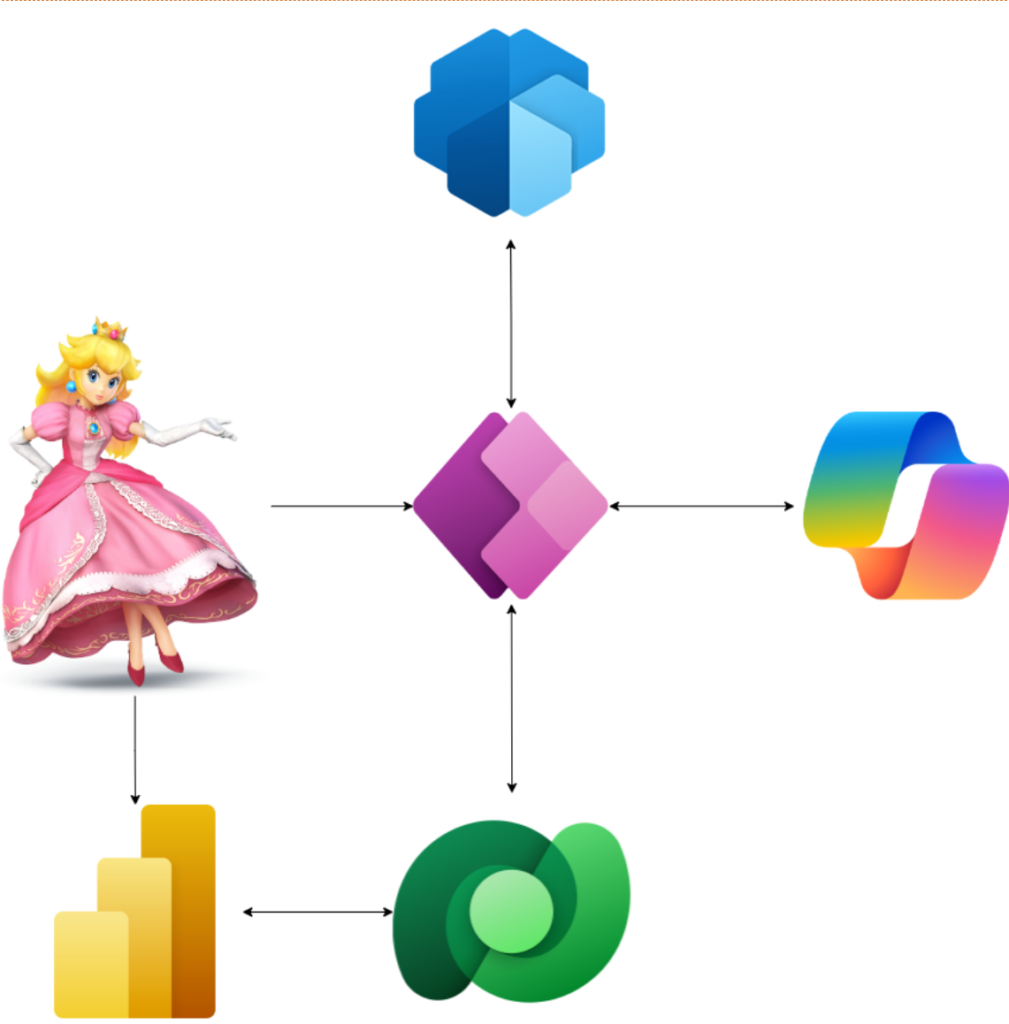
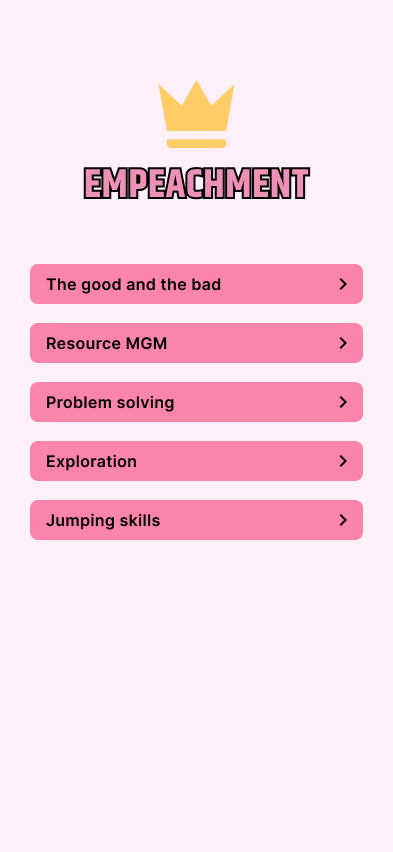
The power app Empechment contains several gamified power pages and a Power BI Dashboard.
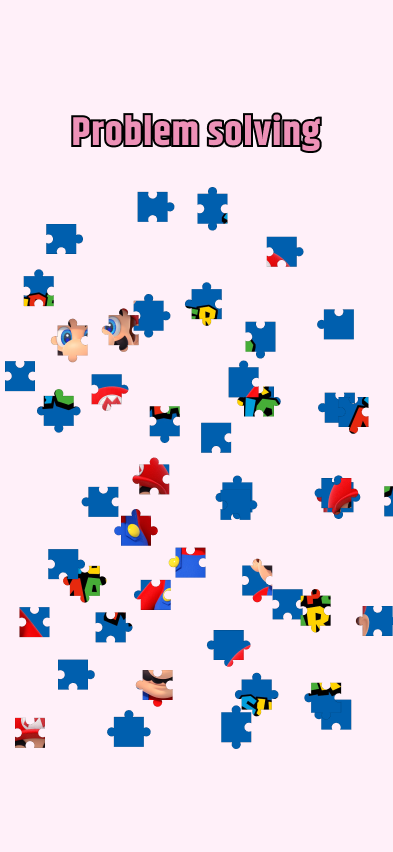
Sketches of the app

The team has set up camp in the Mushroom Kingdom, surrounded by colorful mushroom fields and giant pipes. Gadgets and costumes adorn the camp, ranging from high-tech Mushroom Communicators to innovative Power-Up Mushrooms. There’s an electric excitement in the air, as if an adventure is about to unfold.
Amidst laughter and smiling mushroom characters, whispers of tales from days of old fill the air. Rumors about an NES from the Stone Age have spread like wildfire, and Mario enthusiasts from all over the Mushroom Kingdom gather to witness the nostalgic treasure. The vintage console has the honor of carrying the timeless Mario games, and nostalgia flourishes among adventurous souls.
Princess Peach, adorned in her latest EMPACHMENT gear, glides through the camp with a smile. The independent princess has found a new way to embrace the adventure while participating in the community. The team, led by Mario, has never seen her so radiant and self-assured. It seems like the Mushroom Kingdom has become a place where the adventure never ends, and even princesses take destiny into their own hands.
During the hackathon, we will develop a gamified training app for AI newcomers, focusing on engaging users with retro-style graphics and playful animations. The app will feature interactive tutorials on AI tools like CoPilot and image generation, incorporating a competitive game element for users to score points, while ensuring learning effectiveness remains paramount. We’ll leverage a React front-end with Azure and Dataverse back-end to manage course progression and user data.
Our core objectives are to create an immersive and enjoyable learning platform that demystifies AI for beginners through gamification. We aim to build a comprehensive educational experience that not only teaches the fundamental concepts of AI but also provides hands-on experience with practical applications in the Microsoft suite. Our goal is to foster a competitive yet educational environment where users are incentivized to deepen their understanding of AI tools, promoting both individual learning and collaborative competition. Ultimately, we strive to produce a product that is accessible, engaging, and continuously adaptable to the evolving landscape of AI technology.

The style of the game will be a retro super mario theme, where the user will be able to move between objects aka challenges and interact with them. Each challenge the user encounter, will give point if they manage to finish it. While moving in the platform world, the user will also be prompted with basic AI knowledge, to learn and understand how to interact with it. Challenges will both be in-game interactive experiences and out-of-game tasks like using copilot within the Microsoft environment.
Until 12:00 pm on thursday, Pzl Plumbers has gotten their environment up and running, implementing tables into dataverse that will store the information about users, their points and information regarding the challenges. Power platform pipelines are also configured to our three ALM enviroments (dev, uat, prod). Devops projects has been created for code repos and task management.
They have had some minor struggles with setting up the PCF component for the game, which will be implemented within their Power Page, but its coming along and the team spirit keeps shining as always!
Reducing the complexity
Super Mario isn’t always on adventures, and most of the time he is living a normal life while making a living as a plumber. A typical workday is full of tasks with different levels of complexity, and Mario would benefit from an application that can help reduce some of these tasks. Thereby allowing him to focus on the things he does best… Saving princesses and stomping turtles

Planning a plumbing system
Our solution will be an application developed to help plumbers in planning and estimate the cost of a plumbing system. The basic idea is to upload a houseplan and use AI to recognize obstacles, items that need to be connected and other elements that will affect the final layout. The user will then be able to “draw” the pipes on the plan while avoiding obstacles and connecting required elements, while the application generates a list of components needed for the system and a cost estimate.
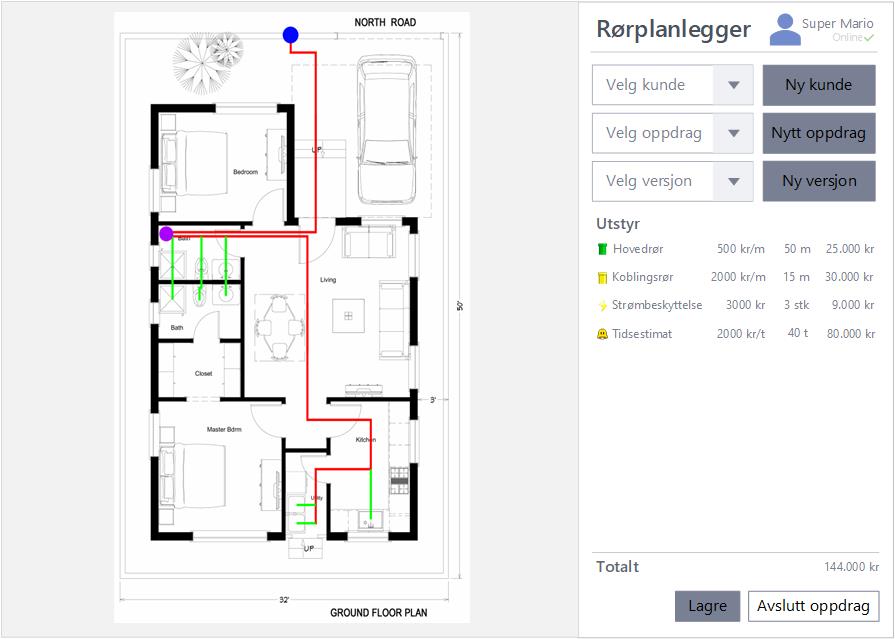
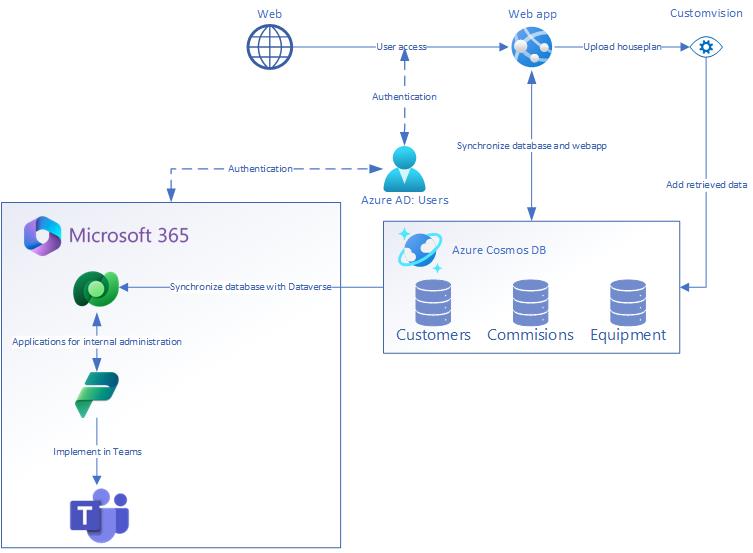
Using Azure and Microsoft 365 for communication and management
The user will log in using their Azure AD user profile to an web app that synchronizes with a database in Azure to make sure speed and accessibility isn’t a problem. From this web app they can upload a houseplan that is immediately analyzed using an AI service to retrieve required data. This data is the saved to the database and synchronized back into the app.
As a new commissions are saved to the database they will be synchronized to Dataverse as both a backup and for easily connectivity to the Power platform. By using this platform there will possible to develop solutions that can be used for other activities like accounting, communication, statistics, etc. This also allows an easy implementation in Teams, allowing users to handle these tasks on the go.
In the heart of May, with the sun shining brightly and the scent of spring in the air, Jan faced a challenge unlike any he had encountered before. Known among his friends as someone not particularly handy, Jan decided it was time to change that perception. Armed with determination and a wall-mounted tool rack, he embarked on a mission to prove his worth.
Jan’s journey began with a cry for help to ChatGPT, a state-of-the-art AI he had heard could solve just about any problem. “I need to hang this up. Help!” he typed, his fingers trembling with a mix of excitement and nervousness.
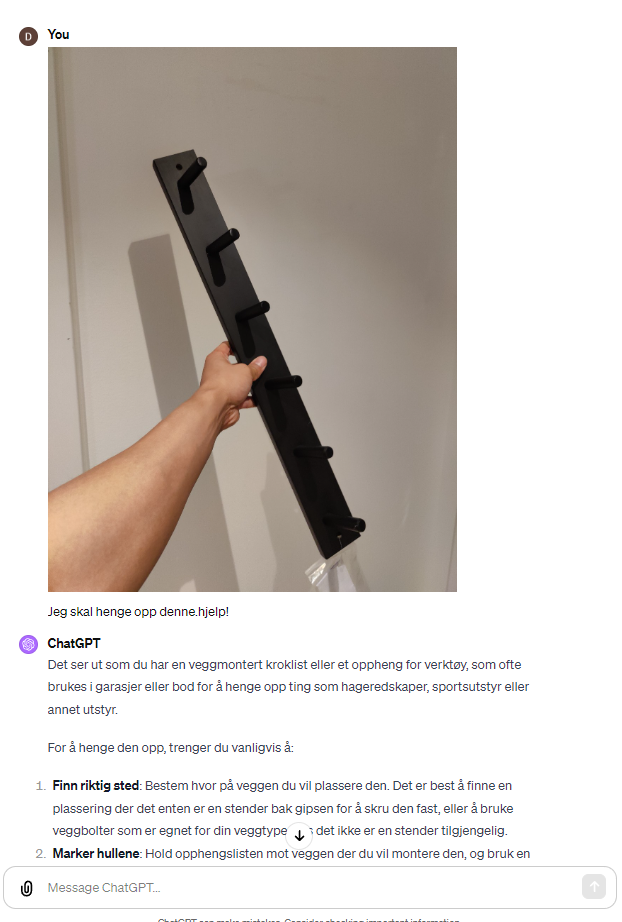
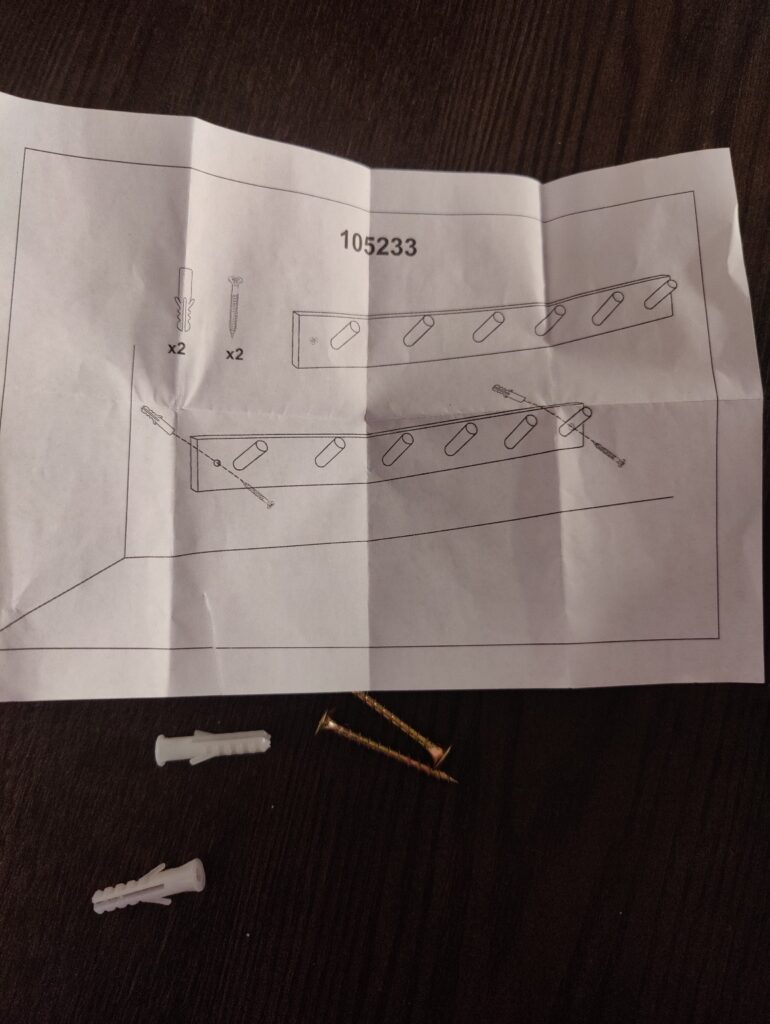
ChatGPT, ever so patient and knowledgeable, guided Jan through the process. It explained the importance of finding the right spot on the wall, marking the holes, drilling, and using the correct screws and wall plugs. Jan, absorbing every word, felt a surge of confidence. He followed each step, measuring the wall, finding the perfect height, and ensuring everything was level.

But then came the drilling. Jan was unsure which drill bit to use. ChatGPT, like a wise mentor, instructed him on how to measure the wall plug and choose the appropriate drill bit. Jan, with a ruler in hand, measured meticulously and selected the right bit. He drilled the holes with precision, his heart racing with each turn of the drill.
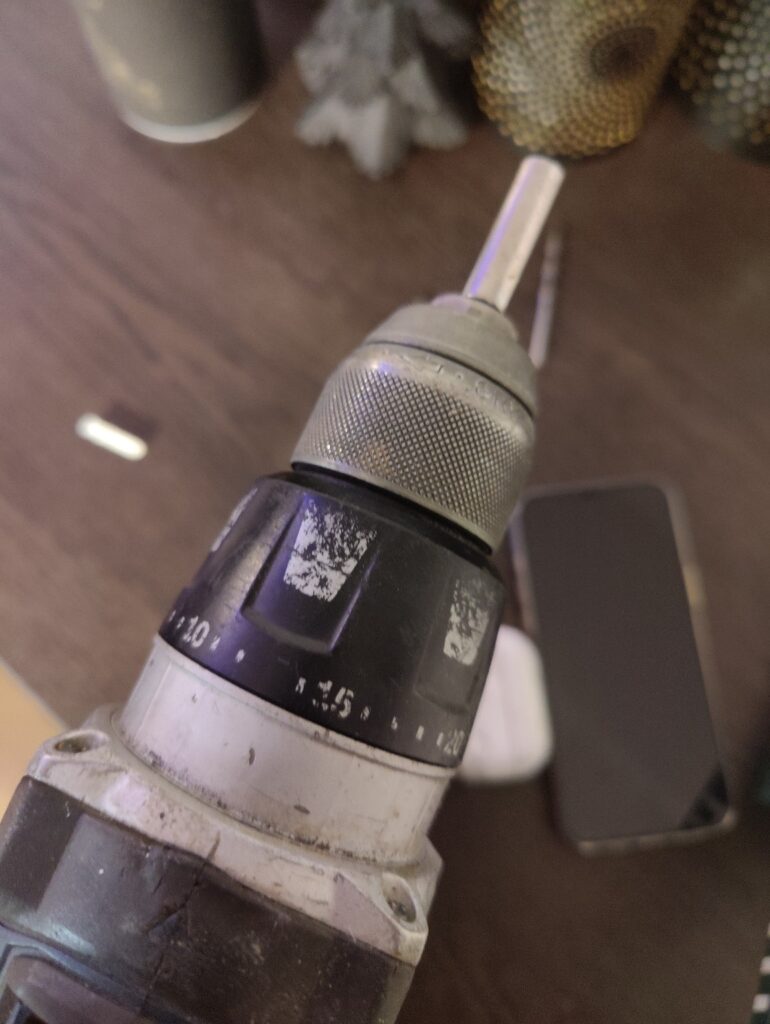
The moment of truth arrived. It was time to hammer in the wall plugs. Jan took a deep breath, reminded by ChatGPT of his capability and the importance of this task. “Many people will depend on this,” he whispered to himself. With a gentle tap, the plugs slid into place, perfect and snug.
Attaching the tool rack to the wall was the final step. Jan aligned the screws, tightened them, and stood back to admire his work. The rack was straight, sturdy, and secure. He had done it!
In that moment, Jan realized he had not just mounted a tool rack on a wall; he had overcome his self-doubt. He had proven to himself that with the right guidance, he could accomplish anything. The AI, ChatGPT, had been his guide, but the real success was his own.
As he hung his tools on the rack, Jan smiled. He had transformed from a man who shied away from a challenge to one who embraced it. This was more than just a task completed; it was a personal victory, a testament to his newfound confidence and skills.
And in the background, ChatGPT silently celebrated Jan’s triumph, its code humming softly in the digital ether, ready to assist another soul in need.
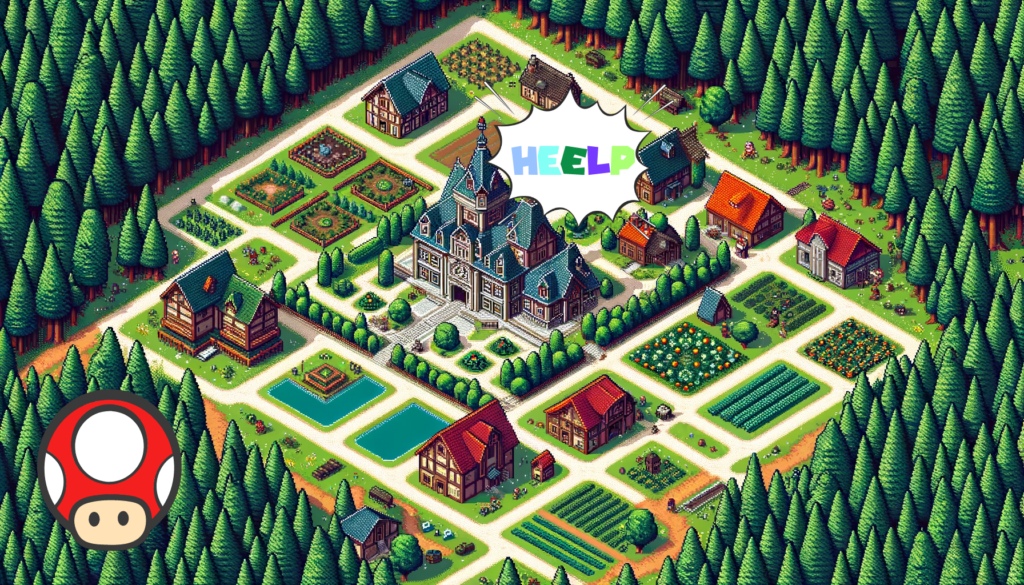
Oh no! Princess Peach has been captured by the evil Bowser in the Soria Moria castle! You need to help the people of the Holmenkollen mushroom kingdom save her by solving puzzles all around the houses of Voksenkollen to find a way to access the scary Soria Moria castle!
The game will be implemented as a point and click adventure using Power Apps and eventually implementing more Power Platform technology to create the puzzles, even in. This first Minimum Viable Delivery is not quite that advanced or even hard yet.
The user enters the game into a map screen.

Clicking on the Gardeners Hut enters the player into the gardeners playroom!
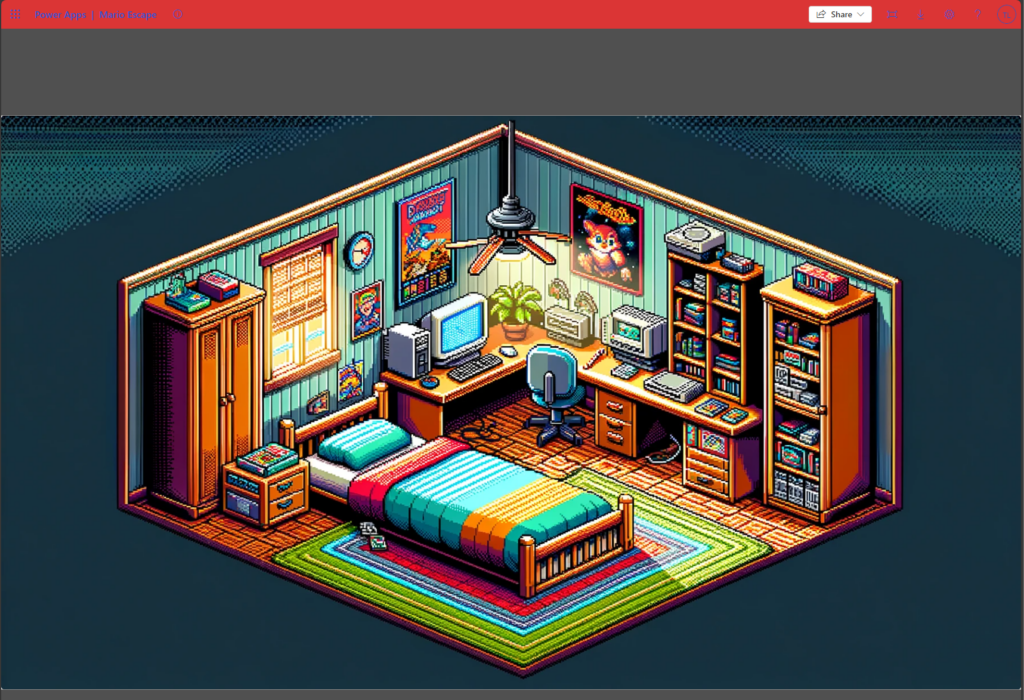
Looking around in the room the player will eventually find the powerbutton to the computer
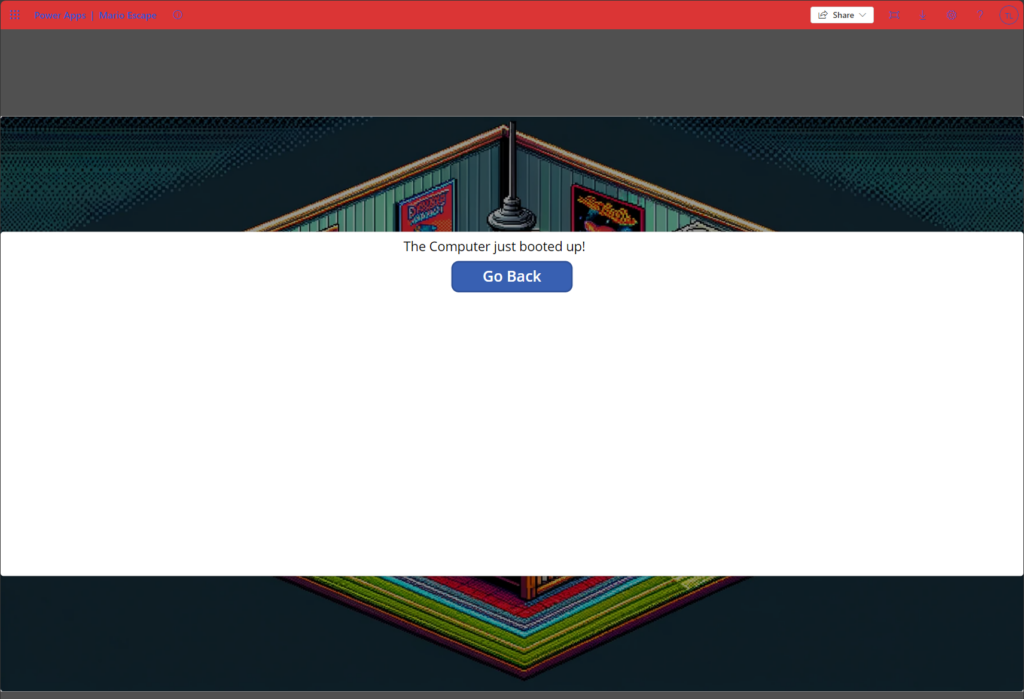
This lets the player solve a puzzle on the computer
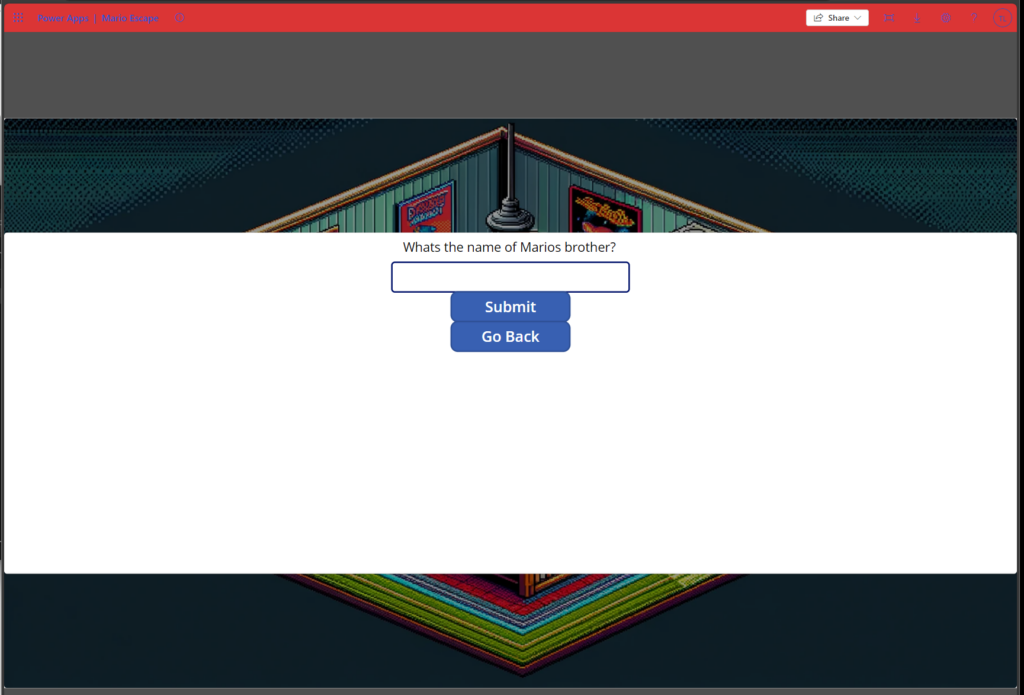
In this early version of the story, it turned out that the gardener had hacked the cage that Bowser stupidly had connected to the internet, so the princess is freed!
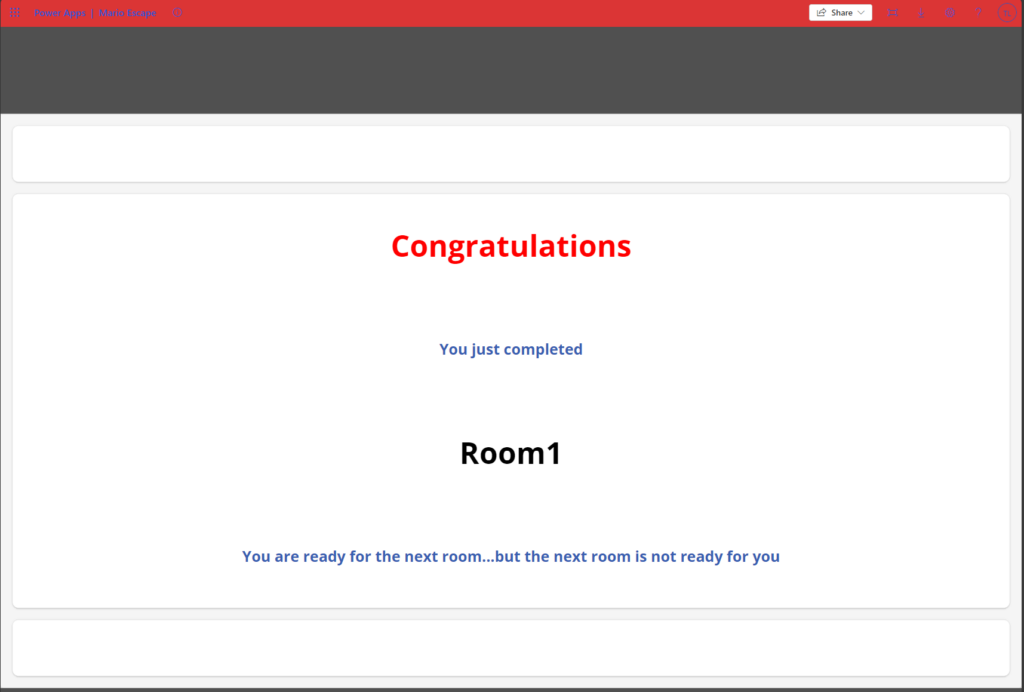
(Fancy graphics pending)
Congratulations, you have escaped the Soria Moria Nightmare!
1. Customer Service Portal
To create the ticket/case that should be resolved. Add live chat support using real time Communications. We will be using Socket.IO as technology.
2. The Kiosk App and Device(iPad) is powered by AI and based on the canvas app.
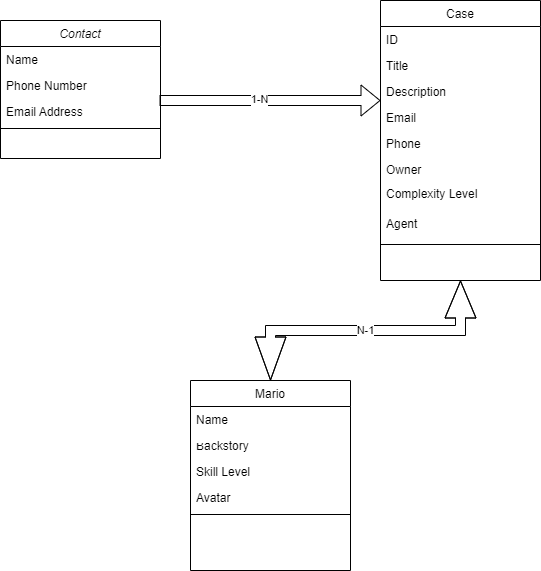
Business needs: Every solution requires some Marios(agents) to help the princess solve the problems.
So, our kiosk allows you to create Mario’s profile:
The avatar, skillset, and story will be generated based on your photo, and then Mario’s profile can participate in solving the cases for the princeses. (no personal data will be collected)

3. Model-driven app:
Provide the opportunity to match the agents and manage the case-solving process in a more advanced mode.
4. Clippy
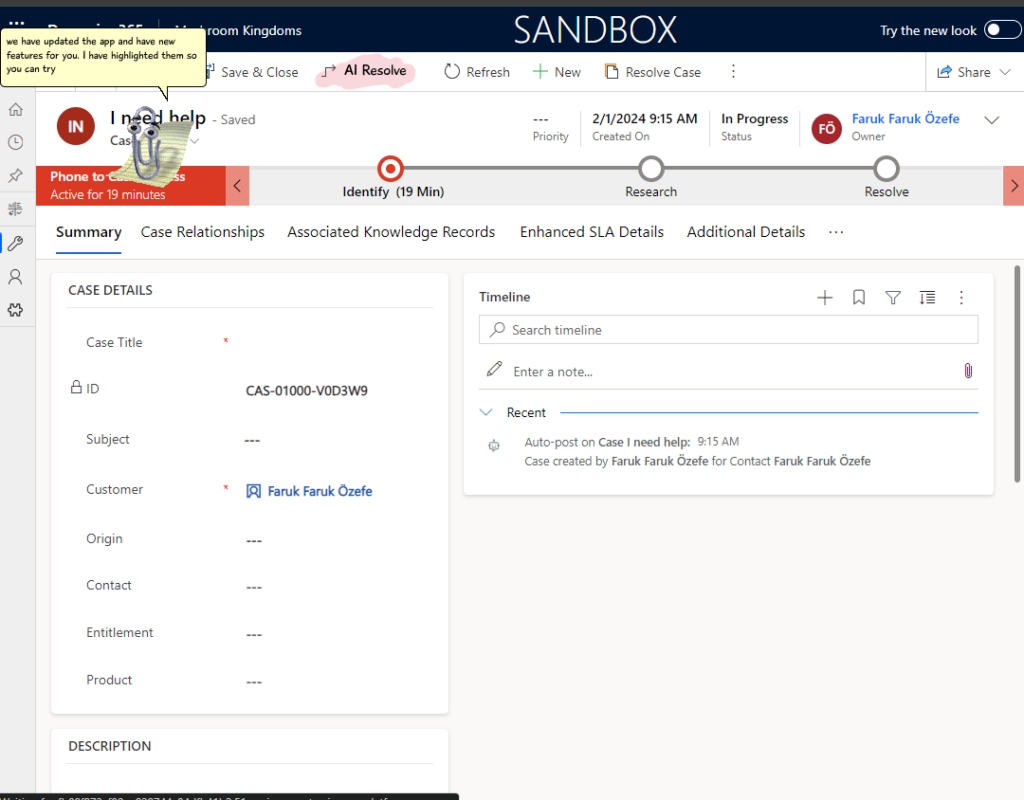
We traveled to past and get back with Clippy. Using PCF controls we managed to implement Clippy in model driven app. Our original plan was to connect Clippy to AI and use it to help users. When the App is updated and the user logs in for the first time it will show a notification and highlight changed parts.
We were so impressed by Scott’s video of the copilot that we decided to add some familiar and modern features to the model-driven app. So we are glad to announce Clippy – your GPT-powered copilot. He will help you establish the most optimal process by providing insights based on AI. We found a very nice looking github library for implementing clippy with pcf.